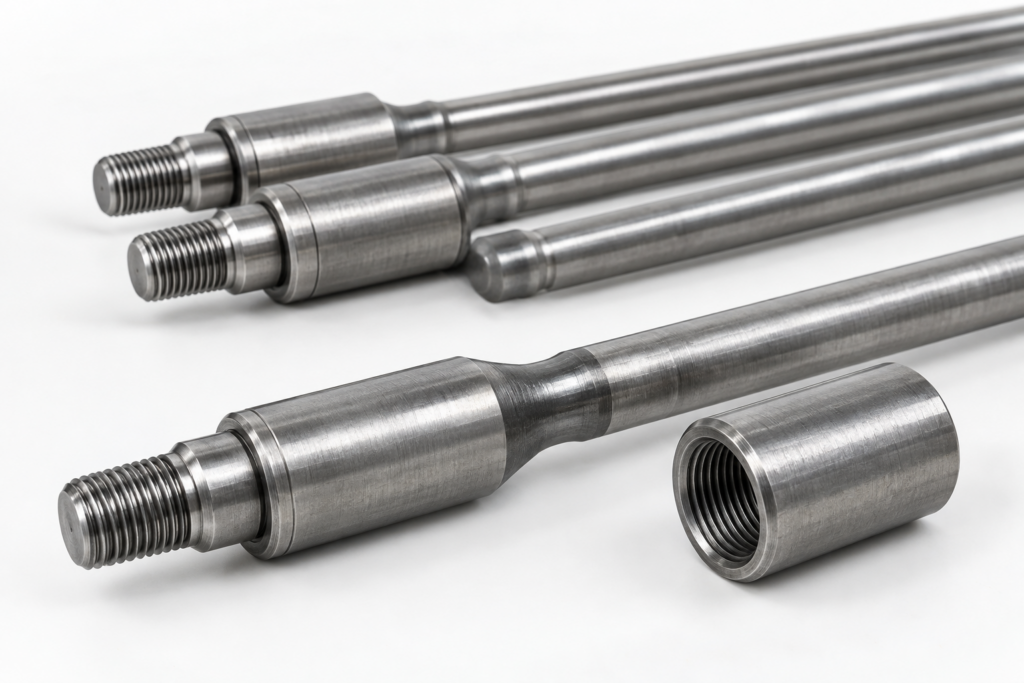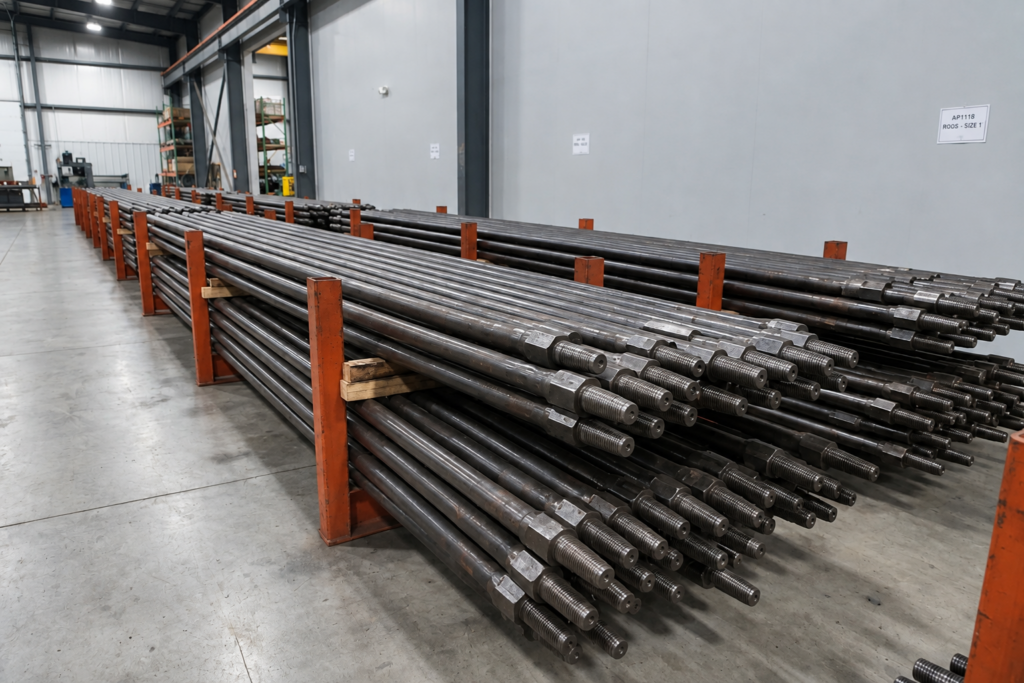
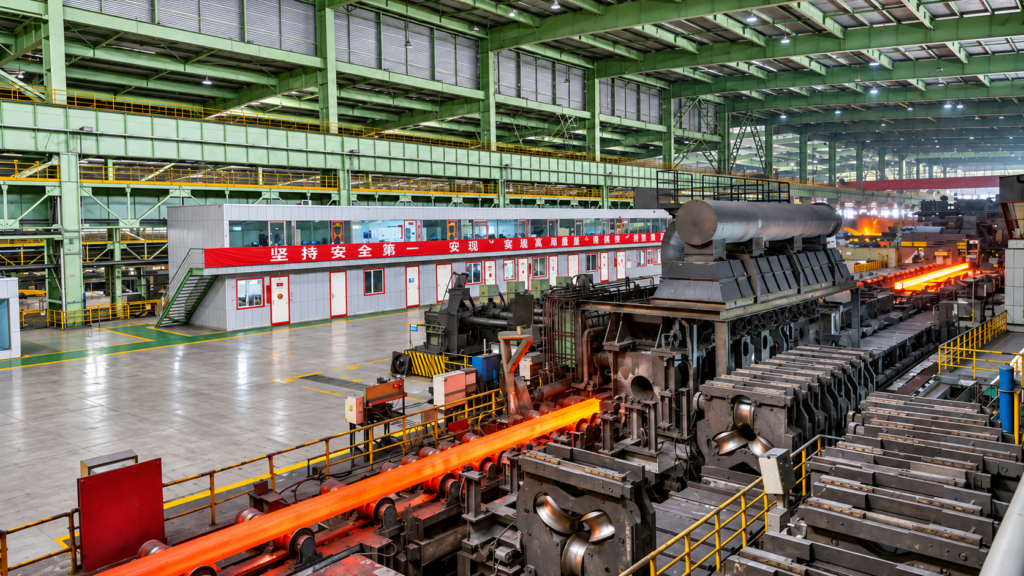
Sucker rods are essential components of rod pumping systems, connecting the surface pumping unit to the downhole pump and transmitting reciprocating motion through the rod string. During operation, they withstand repeated tensile and compressive loads, as well as bending, friction and additional stresses caused by well deviation and downhole conditions. Their performance depends on steel grade, rod dimensions, connection integrity and the mechanical properties of the finished product.
Heat treatment plays an important role in establishing these mechanical properties. Through processes such as normalizing, quenching and tempering, the internal microstructure of sucker rod steel can be modified to achieve the required balance of tensile strength, yield strength, hardness, ductility and impact toughness. For sucker rods manufactured from alloy steels such as 4130 and other grades, heating temperature, holding time and cooling conditions must be properly controlled. Excessive hardness without sufficient toughness can increase susceptibility to brittle damage, while inadequate strength may reduce the rod’s ability to withstand operating loads.
Understanding how different heat treatment processes affect sucker rod mechanical properties is essential for evaluating manufacturing quality and the expected performance of the finished rod. The following sections examine the differences between normalizing and quenching and tempering, their effects on microstructure and mechanical properties, and the testing methods used to verify the final material condition.
Mechanical Properties That Determine Sucker Rod Performance
The mechanical performance of a sucker rod is evaluated through several key properties, each describing a different aspect of material behavior. These properties help determine whether the finished rod can withstand the specified loads, resist permanent deformation and maintain sufficient toughness during service.
| Mechanical Property | Engineering Significance |
| Tensile Strength | Determines the maximum tensile stress a material can withstand before fracture |
| Yield Strength | Indicates the stress at which permanent plastic deformation begins |
| Elongation | Measures the material’s ability to deform plastically before fracture |
| Hardness | Indicates resistance to localized indentation and is related to wear and strength |
| Impact Toughness | Measures the material’s ability to absorb energy during impact loading |
| Fatigue Resistance | Describes resistance to crack initiation and propagation under repeated loading |
These properties are related but are not interchangeable. Higher tensile strength does not automatically mean better fatigue resistance or impact toughness. Similarly, high hardness alone does not guarantee adequate ductility or resistance to brittle fracture.
For sucker rod manufacturing, heat treatment must establish a suitable balance of these properties according to the specified product grade. Mechanical testing and, where required, metallographic examination are used to verify the resulting material condition.
Normalizing vs. Quenching and Tempering
Normalizing and quenching and tempering are two different heat treatment processes used to control the microstructure and mechanical properties of carbon and alloy steel. Both involve heating steel into the austenite temperature range, but their cooling methods produce different microstructures and mechanical properties.
For sucker rod manufacturing, the main difference lies in the final balance of strength, hardness, ductility and toughness. Normalizing primarily refines the grain structure, while quenching and tempering develops higher strength and hardness through rapid cooling followed by controlled reheating.
Normalizing: Grain Refinement and Microstructural Uniformity
Normalizing involves heating steel above its upper critical transformation temperature (Ac3), holding it until the structure transforms into austenite, and then cooling it in still air.
For many hypoeutectoid carbon and low-alloy steels, the normalizing temperature is typically selected around 50–75°C above Ac3. During heating, the original ferrite and pearlite structures transform into austenite. As the steel cools in air, this austenite generally transforms into a finer ferrite-pearlite structure.
For example, a typical AISI 4140 steel heat treatment reference specifies a normalizing temperature of 840–880°C, followed by air cooling. The exact temperature depends on the steel composition and section size.
This process helps refine coarse grains, reduce microstructural variations and establish a more uniform starting structure for subsequent manufacturing or heat treatment.
Quenching and Tempering: Strength and Toughness Development
Quenching and tempering involves two main heating stages separated by rapid cooling.
1. Austenitizing and Quenching
Steel is heated above its Ac3 transformation temperature until the required austenitic structure forms. It is then rapidly cooled, commonly using oil, water or a polymer-based quenching medium selected according to the steel grade and component dimensions.
The rapid cooling can transform austenite into martensite, a hard but relatively brittle structure. The resulting hardness and martensite content depend on steel composition, hardenability and cooling rate.
2. Tempering
After quenching, the steel is reheated to a controlled temperature below Ac1. A common tempering range for quenched-and-tempered steels is approximately 400–650°C, although the actual range depends on the material grade and required properties.
During tempering, carbon redistributes from the martensite and fine carbide particles form, producing a tempered martensitic structure. This reduces brittleness and improves toughness while adjusting the final hardness and strength.
For reference, an AISI 4140 steel heat treatment specification lists an austenitizing temperature of 830–860°C, followed by oil quenching, and a tempering range of 540–680°C.
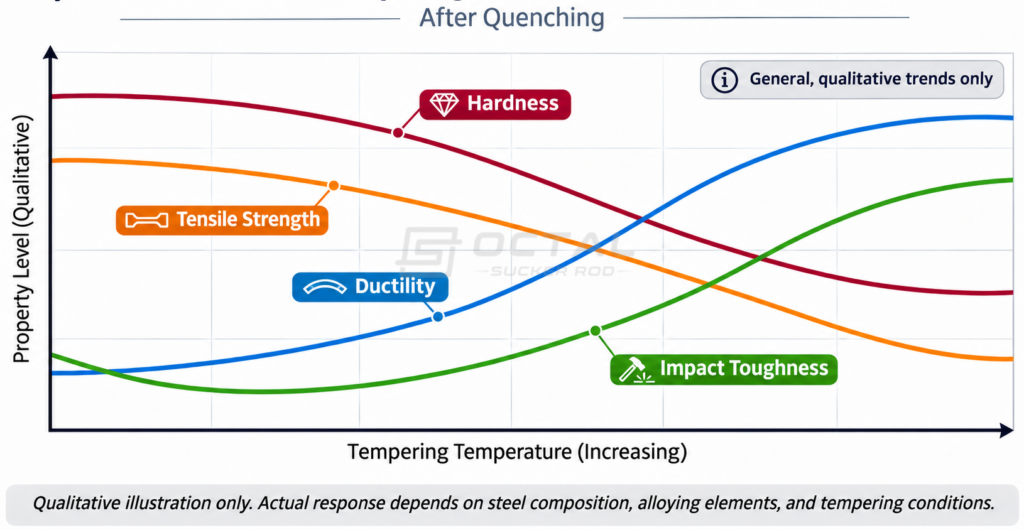
The final mechanical properties depend on both the quenching conditions and tempering temperature. In general, increasing the tempering temperature within a suitable range reduces hardness and increases toughness.
For sucker rod steel, the complete heat treatment cycle must be selected according to the actual steel grade, cross-sectional dimensions and required tensile strength, hardness and toughness. A temperature suitable for one alloy should not automatically be applied to another.
Key Differences Between Normalizing and Quenching and Tempering
The two processes differ mainly in their cooling methods, resulting microstructures and ability to control the final mechanical properties.
| Comparison Factor | Normalizing | Quenching and Tempering |
| Heating Process | Heating above the upper critical transformation temperature | Austenitizing followed by quenching and reheating for tempering |
| Cooling Method | Air cooling | Rapid quenching followed by controlled cooling after tempering |
| Typical Microstructure | Ferrite and pearlite in many carbon and low-alloy steels | Tempered martensite when sufficient hardenability and suitable quenching conditions are achieved |
| Strength and Hardness | Generally moderate, depending on steel composition | Can achieve higher strength and hardness through controlled hardening and tempering |
| Ductility and Toughness | Often retains good ductility, depending on the resulting structure | Adjusted through tempering to achieve the required balance |
| Main Manufacturing Purpose | Grain refinement and microstructural conditioning | Developing higher strength and hardness while controlling brittleness and toughness |
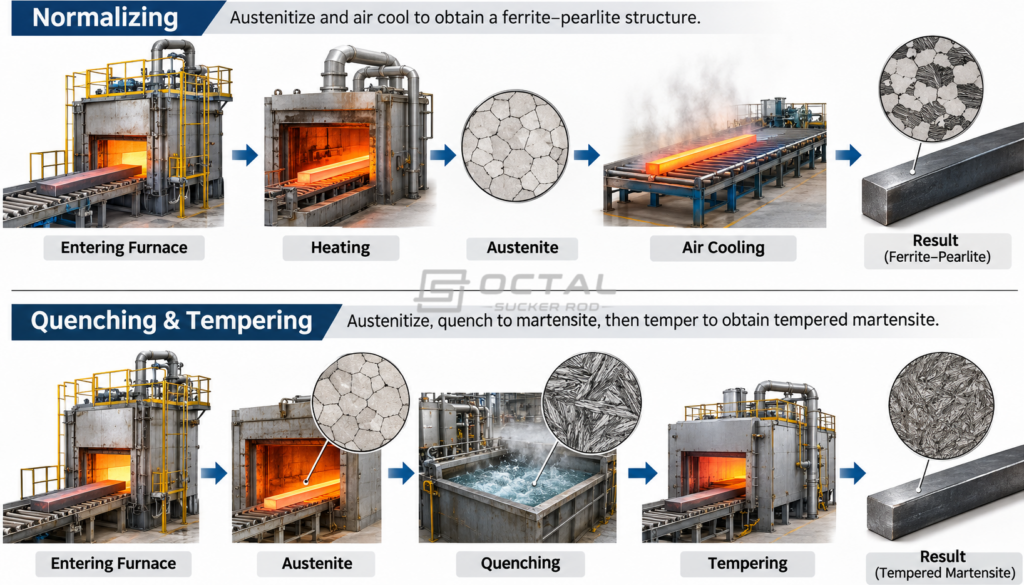
Neither process is universally better for every sucker rod steel. The selection depends on the material grade, chemical composition, rod dimensions and required mechanical properties. The actual heat treatment procedure must be established and verified through mechanical testing rather than selected solely on the basis of the process name.
How Heat Treatment Changes Sucker Rod Steel Microstructure
Heat treatment changes the internal structure of sucker rod steel, which directly affects its strength, hardness, ductility and toughness. Depending on the process and steel composition, normalizing commonly produces a ferrite-pearlite structure, while quenching and tempering can produce tempered martensite.
Ferrite-Pearlite Structure After Normalizing
Ferrite is relatively soft and ductile, while pearlite is harder and contributes to the strength of steel. Their proportions, grain size and distribution influence the final mechanical properties.
During normalizing, controlled air cooling allows these structures to form in suitable carbon and low-alloy steels. A finer and more uniform grain structure can improve the consistency of strength and toughness throughout the material.
Tempered Martensite After Quenching and Tempering
Rapid cooling during quenching can produce martensite, a hard and strong structure. However, untempered martensite generally has limited ductility and toughness.
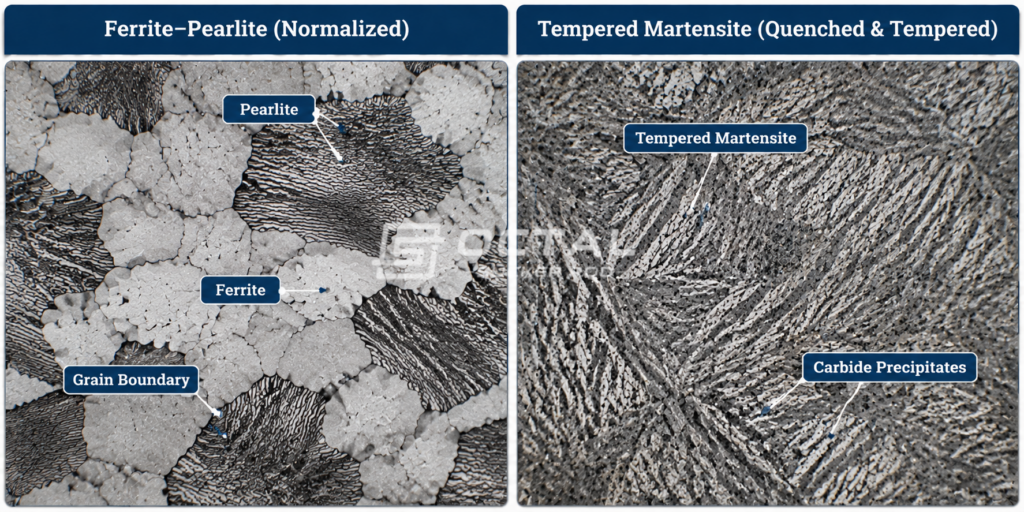
During tempering, carbon redistributes and fine carbides precipitate, while internal stresses are relieved. This produces a more stable tempered structure that retains substantial strength while improving ductility and toughness.
For sucker rod steel, the final microstructure depends on chemical composition, rod dimensions and heat treatment conditions. Its quality should therefore be evaluated through mechanical testing and, where necessary, metallographic examination.
How Heat Treatment Affects Sucker Rod Mechanical Properties
Different heat treatment processes can produce significant differences in the mechanical properties of sucker rod steel. Experimental testing of a novel H-grade sucker rod steel compared Normalizing and Tempering (NT) with Quenching and Tempering (QT), showing differences in tensile strength, yield strength, elongation and impact toughness.
Experimental Mechanical Property Comparison
The following table presents the measured mechanical properties under the two heat treatment conditions.
| Mechanical Property | NT | QT |
| Tensile Strength (MPa) | 1010.58 | 1124.37 |
| Yield Strength (MPa) | 875.93 | 1042.63 |
| Elongation (%) | 15.66 | 11.59 |
| Impact Toughness (J/cm²) | 77.48 | 111.69 |
Note: Experimental results for a novel H-grade sucker rod steel under specific heat treatment conditions. These values are not universal acceptance requirements for all H-grade sucker rods.
The results demonstrate three important differences:
- Tensile and Yield Strength: QT achieved 1124.37 MPa tensile strength and 1042.63 MPa yield strength, approximately 11.2% and 19.0% higher than NT, respectively.
- Elongation: NT achieved 15.66% elongation, compared with 11.59% for QT, indicating greater plastic deformation capacity.
- Impact Toughness: QT reached 111.69 J/cm², approximately 44.2% higher than the NT result of 77.48 J/cm².
These results demonstrate that heat treatment affects multiple mechanical properties rather than strength alone. The appropriate process must achieve the required balance of strength, ductility and toughness for the specified sucker rod grade.
Implications for Sucker Rod Manufacturing
The experimental results highlight the importance of controlling heat treatment parameters during sucker rod production. Changes in heating temperature, holding time and cooling conditions can affect the final microstructure and cause variations in mechanical properties.
For manufacturers, consistent control of the heat treatment process is necessary to achieve the specified mechanical properties across production batches. This includes monitoring furnace temperatures, maintaining appropriate holding times, controlling cooling conditions and verifying the resulting material properties.
Finished sucker rods should be evaluated through applicable mechanical tests, including tensile and hardness testing. Impact testing and metallographic examination may also be required depending on the material specification and inspection requirements.
The final acceptance criteria must follow the applicable product grade, API requirements and purchase specifications. Experimental results from a particular steel composition and heat treatment condition should be used as technical reference data, not as substitutes for product acceptance requirements.
How Tempering Temperature Affects Sucker Rod Mechanical Properties
Tempering temperature is a key factor controlling the final mechanical properties of quenched sucker rod steel. After quenching, reheating the steel to different tempering temperatures changes its internal structure, affecting hardness, tensile strength, ductility and impact toughness. Proper temperature selection is necessary to achieve the mechanical properties required for the specified sucker rod grade.
Effect of Tempering Temperature on Strength and Toughness
Tempering temperature directly influences the decomposition of martensite, carbon redistribution and carbide precipitation. These microstructural changes determine how much strength and hardness the steel retains and how much ductility and toughness it develops.
In general, within the applicable tempering range:
- Lower Tempering Temperature: Retains higher hardness and strength, but may leave limited ductility and toughness.
- Moderate Tempering Temperature: Reduces internal stresses and adjusts hardness while improving the balance between strength and toughness.
- Higher Tempering Temperature: Generally reduces hardness and strength while improving ductility and toughness. Excessive tempering may cause the material to fall below the required strength level.
The relationship is not always linear. Some alloy steels exhibit secondary hardening or temper embrittlement within specific temperature ranges. Therefore, tempering temperature must be selected according to steel composition, initial microstructure and required mechanical properties.
Effect of Tempering Time and Cooling Conditions
In addition to temperature, holding time and cooling conditions influence the final results of tempering.
Tempering Time: Sufficient holding time allows the steel to reach the required temperature throughout the treated section and enables the tempering reactions to progress. Insufficient holding may result in non-uniform mechanical properties, particularly in sections with different dimensions.
Cooling Conditions: Cooling after tempering can also affect the final material condition. Certain alloy steels are susceptible to temper embrittlement when cooled slowly through specific temperature ranges. Appropriate cooling procedures help control this risk.
For sucker rod manufacturing, tempering temperature, holding time and cooling conditions must be established together according to the steel grade and rod dimensions. The resulting mechanical properties should be verified through hardness and tensile testing, with additional impact testing where required.
Key Heat Treatment Controls in Sucker Rod Manufacturing
Consistent heat treatment is essential for maintaining uniform mechanical properties in finished sucker rods. During production, heating temperature, holding time and cooling conditions must be controlled according to the steel grade, chemical composition and rod dimensions. Variations in these parameters can affect the resulting microstructure, hardness, strength and toughness.
| Key Control Parameter | Purpose |
|---|---|
| Heating Temperature | Ensures the required phase transformation |
| Holding Time | Allows sufficient and uniform heating throughout the treated section |
| Cooling Rate | Controls microstructure formation and hardening response |
| Tempering Temperature | Adjusts the final balance of strength, hardness and toughness |
| Tempering Time | Ensures consistent tempering throughout the treated section |
Heat treatment records, furnace temperature monitoring and mechanical testing are used to verify process consistency. Tensile and hardness tests, together with impact testing where required, help confirm that finished sucker rods meet the specified mechanical properties.
Why Choose OCTAL for Sucker Rods
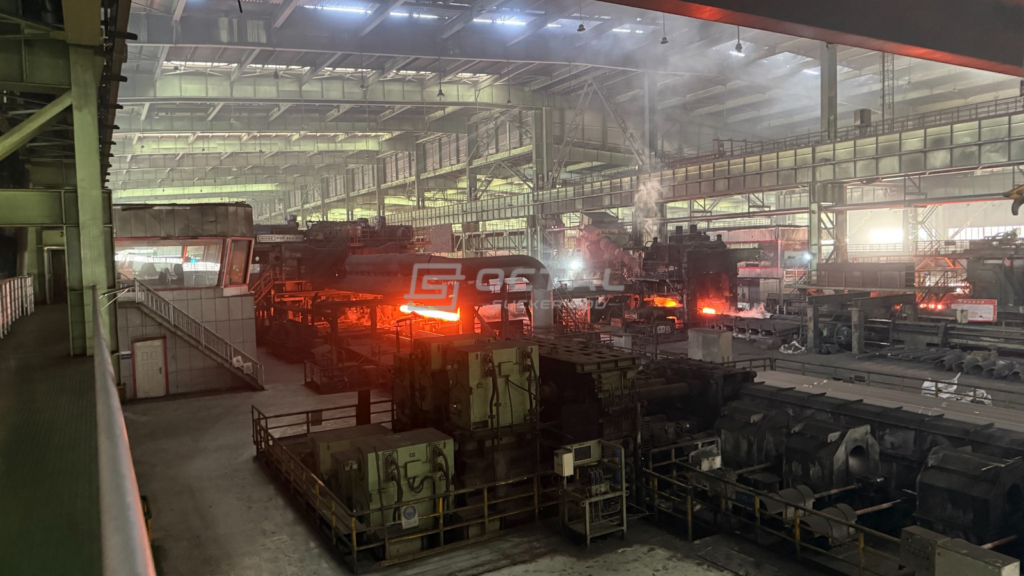
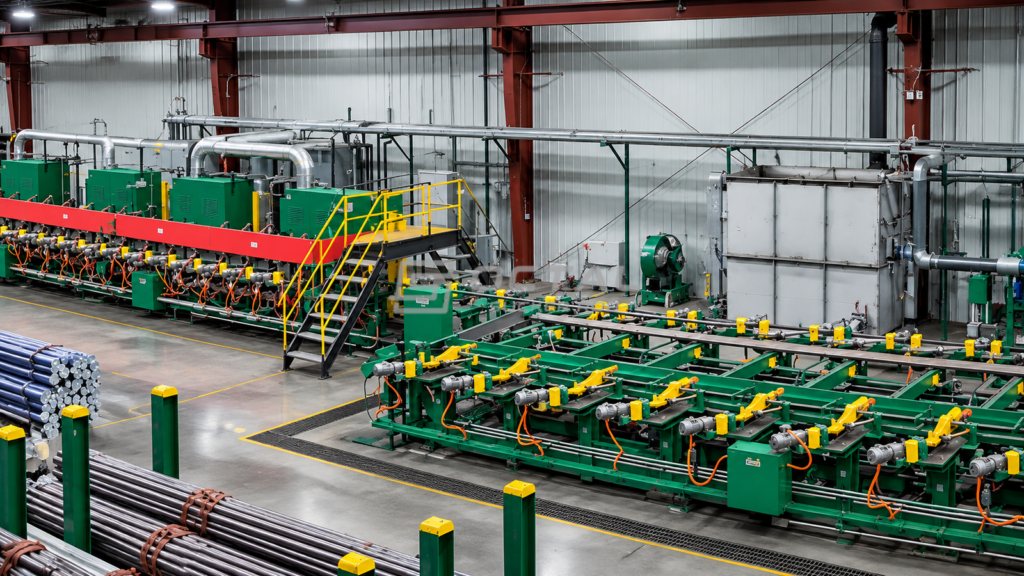
OCTAL supplies API 11B sucker rods in Grades C, K and D-family grades, together with high-strength options such as KD, matched couplings, pony rods, polished rods and sinker bars. Production is coordinated with manufacturing facilities covering forging, upsetting, heat treatment, straightening, machining and thread processing. Quality verification can include chemical composition analysis, tensile, impact and hardness testing, dimensional and thread inspection. Material traceability and inspection records are maintained according to the applicable product specifications and order requirements.
FAQ
Q1. Does heat treatment increase the tensile strength of sucker rods?
Yes. Appropriate heat treatment can increase tensile strength and yield strength by changing the steel’s microstructure. The actual improvement depends on material composition, quenching conditions and tempering parameters.
Q2. What is the difference between normalizing and quenching and tempering?
Normalizing uses air cooling after austenitizing and commonly produces a ferrite-pearlite structure in suitable steels. Quenching and tempering uses rapid cooling followed by reheating to adjust strength, hardness and toughness.
Q3. How does tempering temperature affect sucker rod hardness and toughness?
Increasing tempering temperature generally reduces hardness and strength while improving ductility and toughness within the applicable tempering range. The exact response depends on steel composition and processing conditions.
Q4. What mechanical tests are required for heat-treated sucker rods?
Tensile and hardness testing are important for evaluating mechanical properties. Additional impact testing and metallographic examination may be required by the applicable product specification, purchase order or project ITP.