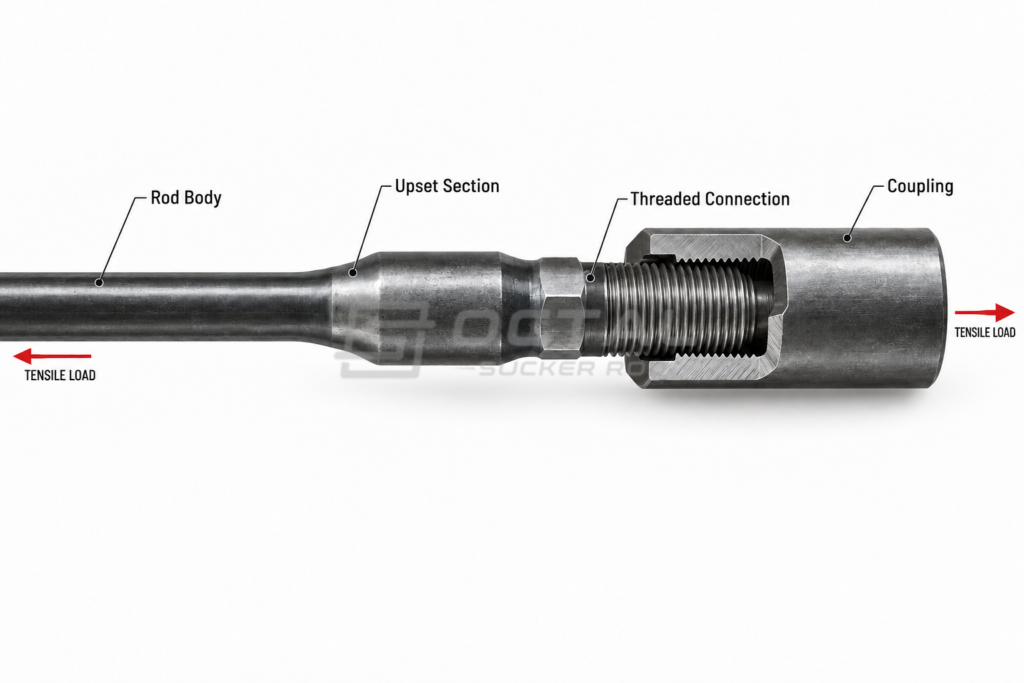
Grade KD Sucker Rod is an API 11B oilfield sucker rod grade manufactured from alloy steel and designed for rod pumping systems that require a combination of mechanical strength, fatigue resistance, and improved service reliability under demanding well conditions. The rod consists of a steel rod body, forged upset ends, and threaded pin connections that transfer the repeated tensile load generated by the surface pumping unit to the downhole pump. During operation, the sucker rod string experiences continuous cyclic loading, including tension, compression, bending, and connection stress; therefore, Grade KD is selected based on its ability to maintain mechanical performance during long-term reciprocating service.
Compared with conventional Grade C and Grade D sucker rods, Grade KD focuses on balancing higher mechanical performance with alloy steel characteristics suitable for more challenging production environments. It is commonly considered for wells where rod string loading, fatigue exposure, and service conditions require a higher performance margin than standard sucker rod grades. The correct selection of Grade KD depends on calculated rod stress, well depth, production fluid conditions, tubing clearance, and required operating life rather than the grade designation alone.
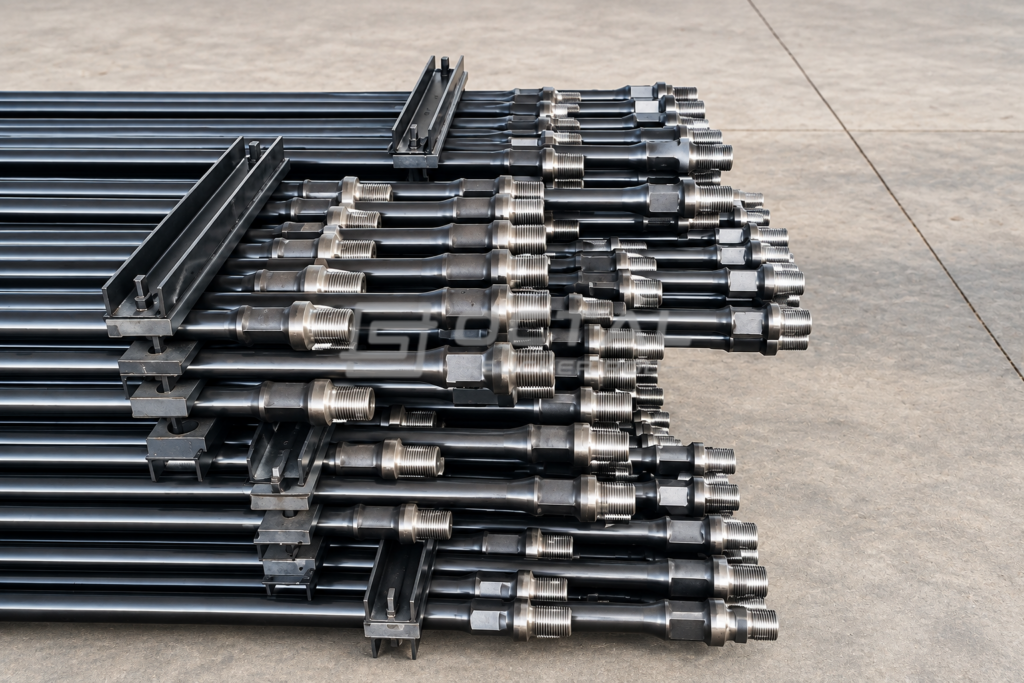
Grade KD Sucker Rod is manufactured according to API 11B sucker rod requirements, including dimensional control, mechanical testing, thread inspection, and traceability. The production process includes forging, upsetting, heat treatment, straightening, machining, and final inspection to ensure stable performance throughout the complete rod string.
API 11B Grade KD Sucker Rod Specifications
The performance of a sucker rod string depends on the relationship between rod body size, connection design, mechanical properties, and operating conditions. API 11B defines the basic requirements for sucker rod dimensions and manufacturing quality, while the final selection is determined by the actual well design.
The nominal size of a sucker rod refers to the diameter of the rod body. It does not represent the maximum diameter of the complete connection assembly. The upset end and coupling area are intentionally larger because they provide additional cross-sectional strength for thread machining and load transfer.
| Nominal Sucker Rod Size | Rod Body Diameter |
| 5/8 in. | 15.88 mm |
| 3/4 in. | 19.05 mm |
| 7/8 in. | 22.23 mm |
| 1 in. | 25.40 mm |
| 1-1/8 in. | 28.58 mm |
For example, a 7/8 in. sucker rod refers to the rod body diameter of approximately 22.23 mm. The coupling diameter, pin area, and upset section are larger than the rod body because the connection must withstand repeated tensile loading during pumping operation.
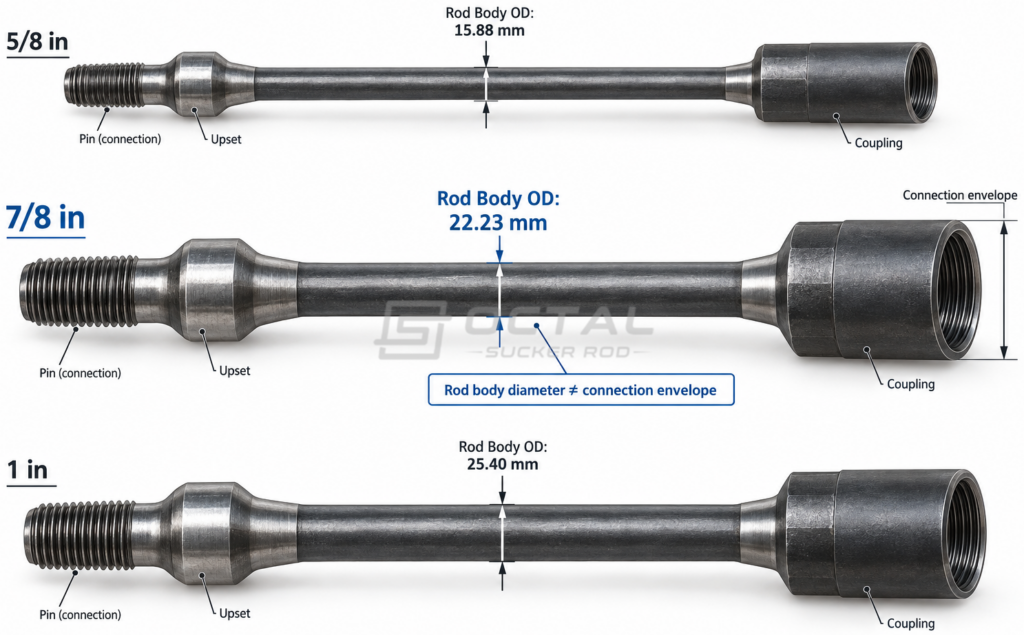
The main dimensional factors considered during procurement include:
| Parameter | Engineering Consideration |
| Rod Body Diameter | Determines tensile load capacity and tubing compatibility |
| Length | Influences total rod string weight and installation configuration |
| Upset Geometry | Provides additional material around the threaded connection |
| Thread Configuration | Determines connection strength and interchangeability |
| Straightness | Reduces eccentric wear between rod and tubing |
| Coupling Type | Affects clearance in tubing and deviated wells |
Grade KD vs Grade C, Grade D, and Grade K Sucker Rod
API 11B sucker rod grades are selected according to the combined requirements of mechanical loading, material characteristics, and well operating conditions. Grade KD is mainly compared with Grade C, Grade D, and Grade K because these grades represent different approaches to sucker rod selection. The main differences are reflected in strength level, material selection, and suitable service conditions.
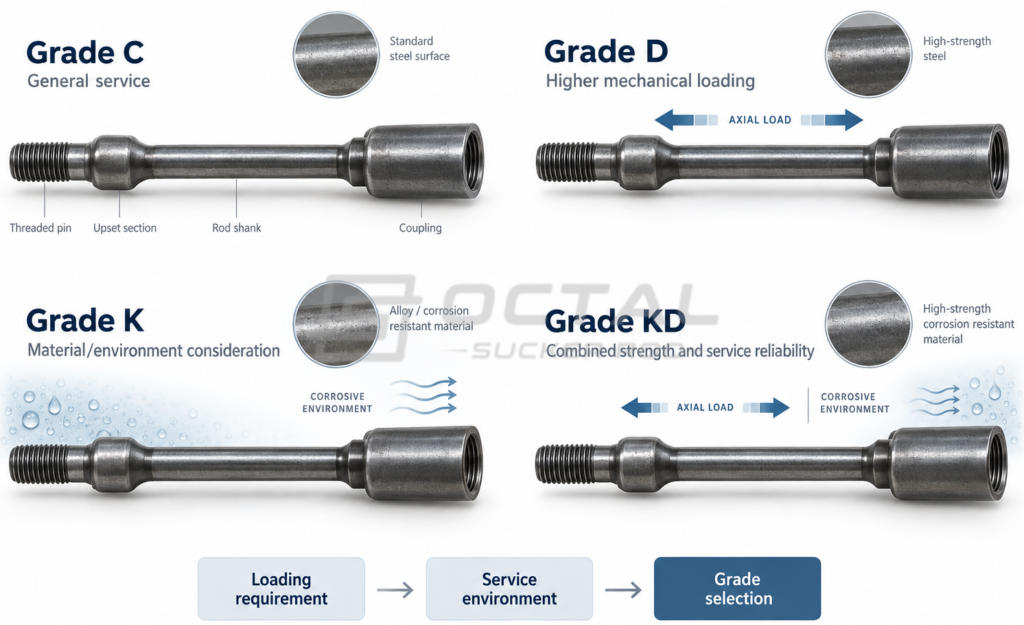
| Grade | Yield Strength | Tensile Strength | Mechanical Characteristics | Typical Selection Consideration |
| Grade C | 60,000 psi / 414 MPa | 90,000–115,000 psi / 621–793 MPa | Standard strength level with balanced ductility | Used for conventional rod pumping applications under moderate loading conditions |
| Grade D | 85,000 psi / 586 MPa | 115,000–140,000 psi / 793–965 MPa | Higher mechanical strength and load capacity | Selected for deeper wells or applications with higher tensile loading requirements |
| Grade K | 60,000 psi / 414 MPa | 90,000–115,000 psi / 621–793 MPa | Alloy-based grade focused on material performance | Considered for wells where corrosion-related service conditions influence material selection |
| Grade KD | Based on D-level mechanical performance | D-level tensile performance with KD material characteristics | Combines higher strength requirements with alloy material advantages | Selected for demanding wells requiring both mechanical performance and service reliability |
From a mechanical performance perspective, the primary difference between these grades is the balance between load capacity and service environment requirements.
Grade C is the conventional choice for standard rod pumping conditions. It provides sufficient mechanical performance for applications where rod-string stress remains within normal operating limits.
Grade D increases the mechanical strength level compared with Grade C. With a yield strength of approximately 85 ksi (586 MPa) and tensile strength reaching 115–140 ksi (793–965 MPa), Grade D provides additional load capacity for wells where tensile stress and cyclic loading are the dominant design factors.
Grade K follows a different selection principle. Its mechanical strength level is similar to Grade C, but its alloy material characteristics make it suitable for applications where production fluid conditions and corrosion-related factors require additional consideration.
Grade KD combines the characteristics considered in Grade D and Grade K selection. It is not simply a stronger version of Grade D or a corrosion-resistant version of Grade K. Instead, it is selected when the rod string requires both higher mechanical performance and improved material suitability under demanding operating conditions.
For engineering selection, the dominant failure risk should determine the sucker rod grade. When the primary concern is tensile loading, Grade D may satisfy the design requirement. When the well involves higher cyclic loading together with challenging production conditions, Grade KD provides a more balanced solution. The final selection should consider rod-string stress calculation, well depth, deviation, production fluid characteristics, tubing clearance, and expected service life.
Grade KD vs Grade D vs Grade K Sucker Rod Selection
Grade KD is often compared with Grade D and Grade K because these grades address different combinations of mechanical and environmental requirements.
Grade D primarily emphasizes higher mechanical strength. It is commonly selected when the dominant design factor is tensile loading capacity.
Grade K emphasizes alloy material characteristics for service conditions where corrosion-related factors require additional consideration.
Grade KD combines characteristics from both selection approaches. It is considered when the well environment requires higher mechanical performance while also requiring improved material performance compared with conventional grades.
| Selection Factor | Grade D | Grade K | Grade KD |
| Mechanical Loading | High | Moderate | High |
| Material Consideration | Strength-focused | Environment-focused | Combined requirement |
| Typical Selection Reason | Higher tensile demand | Corrosion-related service consideration | Strength and service reliability balance |
| Main Design Factor | Rod stress | Production fluid condition | Rod stress + service environment |
The correct choice should be based on engineering calculation rather than simply selecting the highest grade. Excessive strength does not automatically improve service life if corrosion, tubing wear, or connection conditions become the dominant failure mechanism.
Material Selection and Heat Treatment Process
Grade KD Sucker Rod performance depends on controlled alloy steel selection and a stable heat treatment process. The material must achieve a balanced combination of strength, toughness, and fatigue resistance because the rod string operates under repeated tensile loading during pumping cycles.
Production begins with alloy steel verification to ensure the chemical composition can achieve the required mechanical properties after heat treatment. The rod ends are then formed through forging and upsetting to provide sufficient material for thread machining and improve connection load capacity.
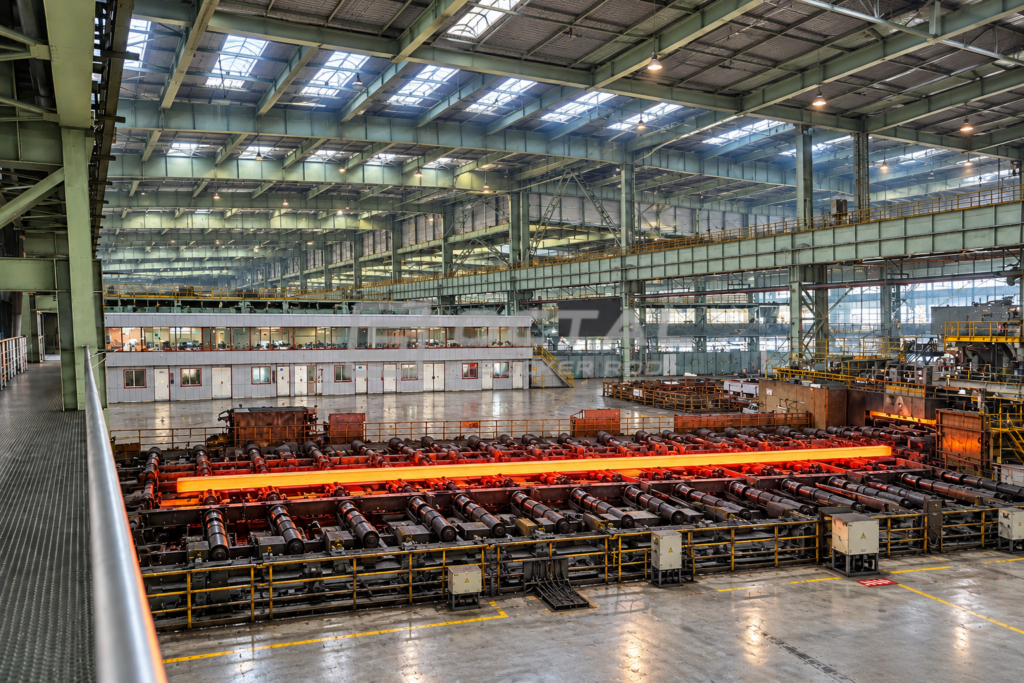
The heat treatment process includes controlled heating, quenching, and tempering. The manufacturing base uses box-type resistance furnace quenching and tempering lines with thermocouple-controlled heating zones, allowing independent temperature adjustment and more uniform heating along the rod length. This process helps maintain consistent microstructure and stable mechanical properties after treatment.
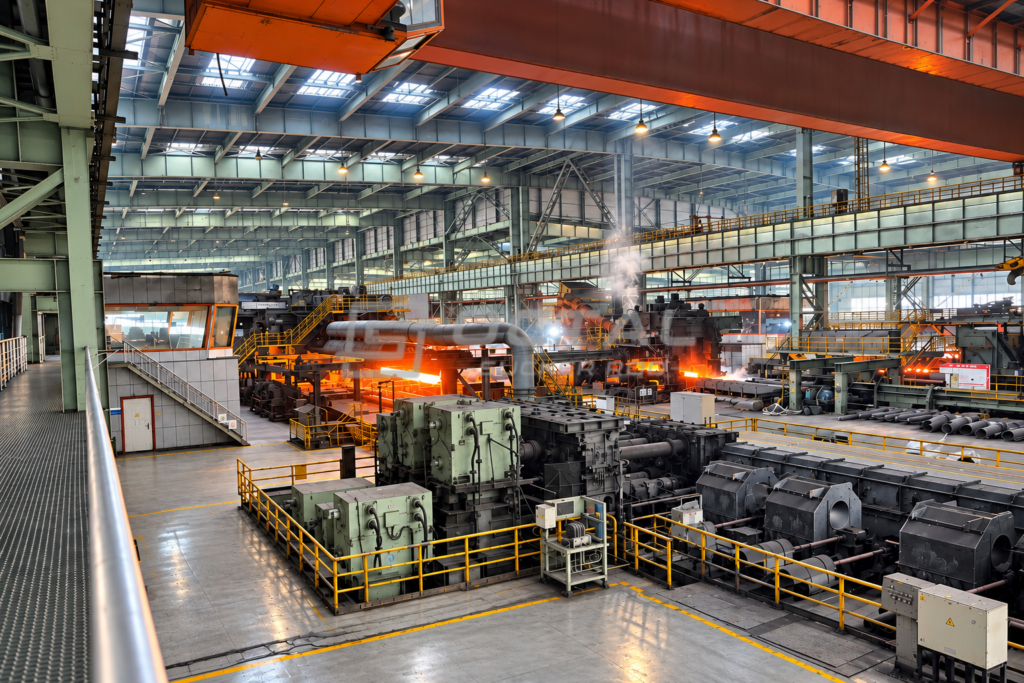
After heat treatment, the rods are straightened before machining and inspection. The production facility is equipped with an 800-ton horizontal forging machine, 800-ton hydraulic upsetting unit, and 1,000-ton hydraulic straightening machine, supporting consistent control of rod geometry and connection quality.
For Grade KD Sucker Rod, the purpose of heat treatment is not simply to increase hardness, but to achieve a reliable balance between load capacity, fatigue resistance, and long-term service stability under cyclic oilfield operating conditions.
Applications of Grade KD Sucker Rod
Grade KD Sucker Rod is selected for rod pumping systems where the operating condition requires a higher level of mechanical reliability than conventional sucker rod grades. Its application is mainly determined by the combined effect of rod-string loading, cyclic fatigue exposure, and well service environment.
In a rod pumping system, the sucker rod string is continuously subjected to tensile loading, unloading cycles, connection stress, and possible bending caused by well deviation. Therefore, Grade KD is considered when the design requires additional performance margin while maintaining reliable operation under long-term cyclic service.
The selection of Grade KD is typically evaluated based on the following factors:
| Design Factor | Impact on Grade KD Selection |
|---|---|
| Rod String Load | Higher tensile loading increases the requirement for yield strength and fatigue resistance |
| Pumping Cycle Frequency | More operating cycles increase cumulative fatigue exposure and require stable material performance |
| Well Depth | Greater depth increases rod-string weight and overall tensile stress |
| Well Deviation | Higher deviation increases bending stress and contact between rod and tubing |
| Production Fluid Condition | Corrosive or aggressive environments may influence material selection requirements |
| Tubing and Coupling Clearance | Determines suitable rod size and connection configuration |
For wells where the dominant risk is only mechanical loading, Grade D may meet the design requirement. When the application requires consideration of both higher cyclic loading and service environment, Grade KD provides a more balanced selection. The final grade decision should be based on rod-string calculation, operating parameters, connection design, and inspection requirements.
Dimensional Control and Connection Design
The connection area is one of the most critical parts of a sucker rod because it transfers the entire rod-string load between individual rods.
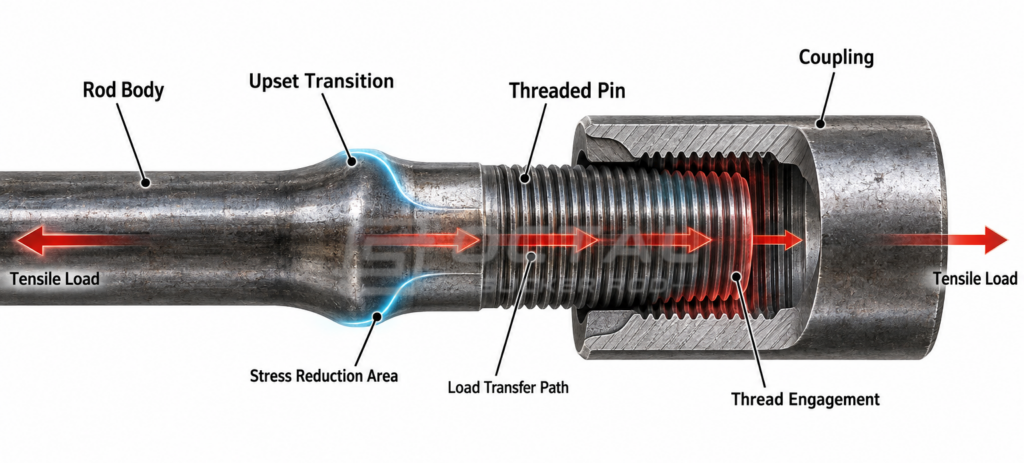
A complete Grade KD sucker rod assembly includes:
| Section | Function |
| Rod Body | Carries the primary axial load |
| Upset Transition | Reduces stress concentration between rod body and connection |
| Forged End | Provides sufficient material for thread machining |
| Threaded Pin | Connects individual rods into the rod string |
| Coupling | Transfers load between connected rods |
During operation, the connection experiences tensile stress, torque during makeup, and repeated fatigue loading. Therefore, thread accuracy, surface condition, and dimensional consistency are essential.
The manufacturing facility described in the sucker rod capability document includes dedicated forging, friction welding, upsetting, straightening, heat treatment, and inspection equipment for sucker rod production. Large-scale equipment includes an 800-ton horizontal forging machine, 1,000-ton hydraulic straightening machine, 800-ton hydraulic upsetting unit, and multiple heat treatment units.document includes dedicated forging, friction welding, upsetting, straightening, heat treatment, and inspection equipment for sucker rod production. Large-scale equipment includes an 800-ton horizontal forging machine, 1,000-ton hydraulic straightening machine, 800-ton hydraulic upsetting unit, and multiple heat treatment units.
Manufacturing Quality Control and Inspection
Quality control for Grade KD Sucker Rod covers material verification, manufacturing process control, mechanical testing, dimensional inspection, and product traceability.
The inspection process includes:
| Inspection Item | Purpose |
| Chemical Analysis | Confirms alloy composition |
| Tensile Testing | Verifies yield strength and tensile strength |
| Hardness Testing | Confirms heat treatment consistency |
| Metallographic Examination | Evaluates microstructure condition |
| Dimensional Inspection | Confirms size and tolerance requirements |
| Thread Inspection | Ensures connection accuracy |
| Straightness Inspection | Controls rod alignment |
The production system includes multiple sucker rod production lines and heat treatment units. The controlled manufacturing process allows consistent heating, cooling, and mechanical property stability across production batches.
For international procurement, quality documentation normally includes material certificates, mechanical test reports, dimensional inspection records, thread inspection reports, heat treatment records, and traceability documentation.
Octal Supply and Technical Support
Octal can supply Grade KD Sucker Rods together with matching couplings, pony rods, and related rod-string components, allowing the connection size, thread configuration, and rod grade to be checked as one system rather than as separate items. The manufacturing base also supports tensile, impact, hardness, metallographic, dimensional, and connection-related inspection for sucker rod products.
For project procurement, Octal can provide technical support based on the required rod size, grade, length, coupling type, operating condition, and inspection requirements. Supply documentation can be organized by production lot so that material, heat-treatment, mechanical-test, and dimensional inspection records remain traceable through delivery. This makes it easier for purchasers to verify Grade KD sucker rods against the purchase specification before installation.requirements.
FAQ
What is Grade KD Sucker Rod?
Grade KD Sucker Rod is an API 11B sucker rod grade designed for applications requiring a combination of higher mechanical performance and improved service reliability compared with conventional grades.
What is the difference between Grade KD and Grade D sucker rod?
Grade D mainly focuses on higher mechanical strength, while Grade KD considers both mechanical performance and alloy material characteristics for more demanding service conditions.
Is Grade KD stronger than Grade K sucker rod?
Grade KD is generally selected for applications requiring higher mechanical performance than standard K-grade applications. However, selection depends on the actual well condition rather than strength alone.
Does sucker rod hardness determine service life?
Hardness is only one indicator of material condition. Actual service life depends on mechanical properties, fatigue resistance, corrosion environment, connection quality, and operating conditions.
What documents should be provided for Grade KD Sucker Rod?
Typical documents include material certificates, mechanical test reports, dimensional inspection records, thread inspection results, heat treatment records, and traceability documents.