
High Strength Sucker Rod is designed as a high-performance oilfield rod for deep wells and high-load production conditions where conventional sucker rods face increased mechanical stress. In rod pumping systems, it transfers the reciprocating movement and tensile load from the surface pumping unit to the downhole pump through the rod string during continuous production cycles.
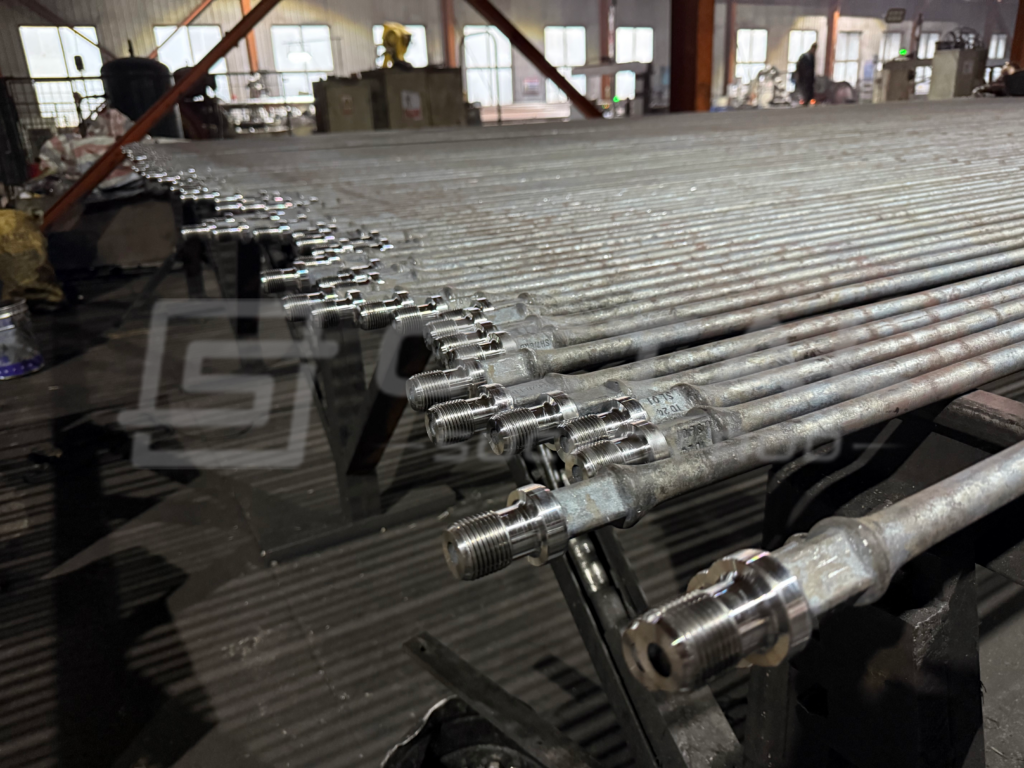
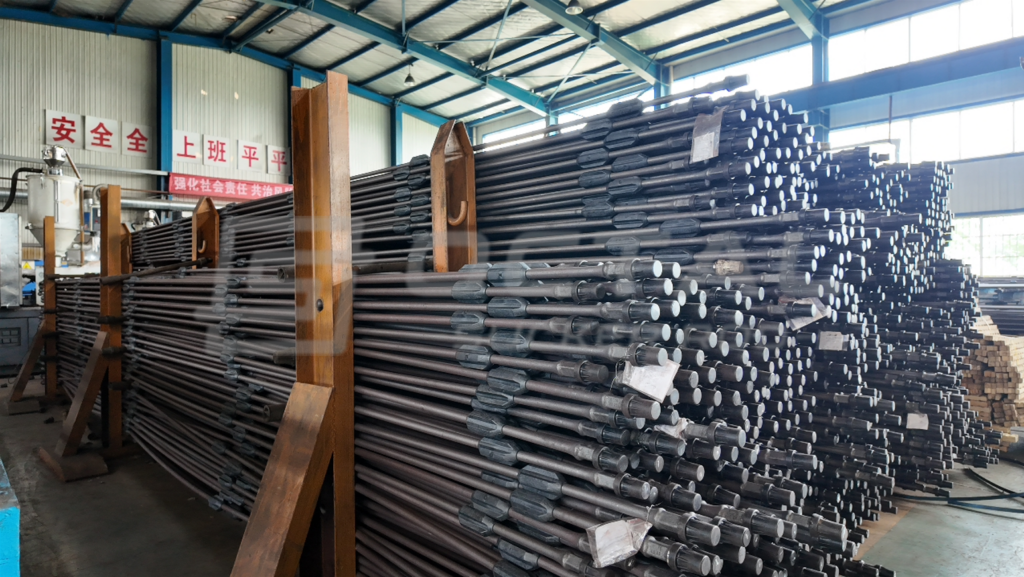
The enhanced performance of high strength sucker rods comes from optimized alloy steel selection, controlled forging, heat treatment and precision thread machining, which improve tensile capacity, toughness and fatigue resistance under repeated loading conditions. These rods are commonly used in deep wells, long rod strings and heavy-duty pumping applications where higher load carrying capability is required.compared with conventional sucker rod grades, High Strength Sucker Rod provides greater mechanical margin through improved material properties and manufacturing control, helping reduce the risk of premature failure in demanding rod pumping environments.Octal supplies High Strength Sucker Rods in multiple diameters, lengths and high-strength grades, with connection configurations coordinated to the required rod string design and operating conditions.
Specifications of High Strength Sucker Rod
High Strength Sucker Rod specifications are defined based on API Spec 11B requirements for steel sucker rods, with consideration given to rod string design, well depth, pumping load, tubing clearance, connection requirements and operating conditions. The main specification parameters include material grade, nominal diameter, standard length, connection type and applicable pumping conditions.
| Item | Specification |
|---|---|
| Product Name | High Strength Sucker Rod |
| Standard | API Spec 11B |
| Material Type | Alloy Steel |
| Typical Grades | HL, HY, High Strength Custom Grades |
| Nominal Diameter | 5/8 in (15.88 mm), 3/4 in (19.05 mm), 7/8 in (22.23 mm), 1 in (25.40 mm), 1-1/8 in (28.58 mm) |
| Standard Length | 25 ft (7.62 m), 30 ft (9.14 m) |
| Connection Type | API sucker rod thread |
| Application | Rod pumping systems, artificial lift systems, deep and high-load oil wells |
High Strength Sucker Rod Mechanical Properties
Mechanical properties determine how a sucker rod grade responds to different loading conditions. Yield strength defines resistance to permanent deformation, tensile strength indicates ultimate load capacity, and elongation with reduction of area reflects the material’s ductility during loading.
| Grade | Minimum Yield Strength | Tensile Strength | Elongation | Reduction of Area |
|---|---|---|---|---|
| Grade HL | 795 MPa (115 ksi) | 965–1195 MPa (140–173 ksi) | ≥13% | ≥45% |
| Grade HY | High strength design | 965–1195 MPa (140–173 ksi) | Depends on specification | High hardness design |
Compared with conventional sucker rod grades such as C, K and D, HL and HY grades provide increased strength capability for deeper wells, higher rod-string loading and more demanding pumping conditions. However, rod selection should consider the complete operating system, including rod diameter, connection capacity, tubing clearance and cyclic loading conditions.
High Strength Sucker Rod vs Standard Sucker Rod
A high strength sucker rod does not achieve higher load capacity by increasing the rod diameter. The improvement mainly comes from the material grade, heat treatment process and controlled mechanical properties of the steel.
For the same nominal size, different sucker rod grades can provide different tensile capacity and service performance. Standard grades such as C, K and D are commonly used for general rod pumping conditions, while HL and HY grades are designed for applications requiring higher strength levels and improved resistance to cyclic loading.
| Feature | Standard Sucker Rod | High Strength Sucker Rod |
|---|---|---|
| Typical Grades | C, K, D | HL, HY |
| Strength Design | API conventional grades | High strength grades |
| Material & Processing | Standard steel grade and heat treatment | Optimized alloy steel and controlled heat treatment |
| Load Capacity | Suitable for conventional rod loads | Higher tensile load capability |
| Typical Service Condition | General pumping wells | Deep wells and high-load rod strings |
The selection between standard and high strength sucker rods depends on the actual loading condition of the complete rod string. In deeper wells or high-load pumping systems, increasing rod diameter may not always be practical because of tubing clearance and well configuration limitations.
High strength grades provide an alternative solution by increasing the load capacity within the same dimensional range. The final selection should consider rod size, connection strength, pumping load and operating environment rather than mechanical strength alone.
Working Principle of High Strength Sucker Rod
A High Strength Sucker Rod works as part of the rod string connecting the surface pumping unit with the downhole pump. The reciprocating motion generated at the surface passes through the polished rod and sucker rod string, driving the pump plunger through repeated upward and downward strokes.
During the upstroke, the rod string pulls the pump plunger upward and carries the lifting force generated by the rod string, pump and produced fluid. During the return stroke, the rod string moves back with the pumping unit and the pump completes the next part of the cycle. Threaded rod ends and couplings connect each section so the entire rod string moves as one continuous mechanical system.
High strength sucker rods follow the same operating principle as conventional sucker rods, but are used where deeper wells, longer rod strings or higher pumping loads create greater mechanical demand on the rod string.
Manufacturing Process of High Strength Sucker Rod
The manufacturing of High Strength Sucker Rod starts with alloy steel selection and controlled heat treatment to obtain the required combination of tensile strength, toughness and fatigue resistance. Unlike conventional sucker rods, high strength grades rely on controlled metallurgy and processing parameters to achieve higher load capacity within the same nominal diameter.
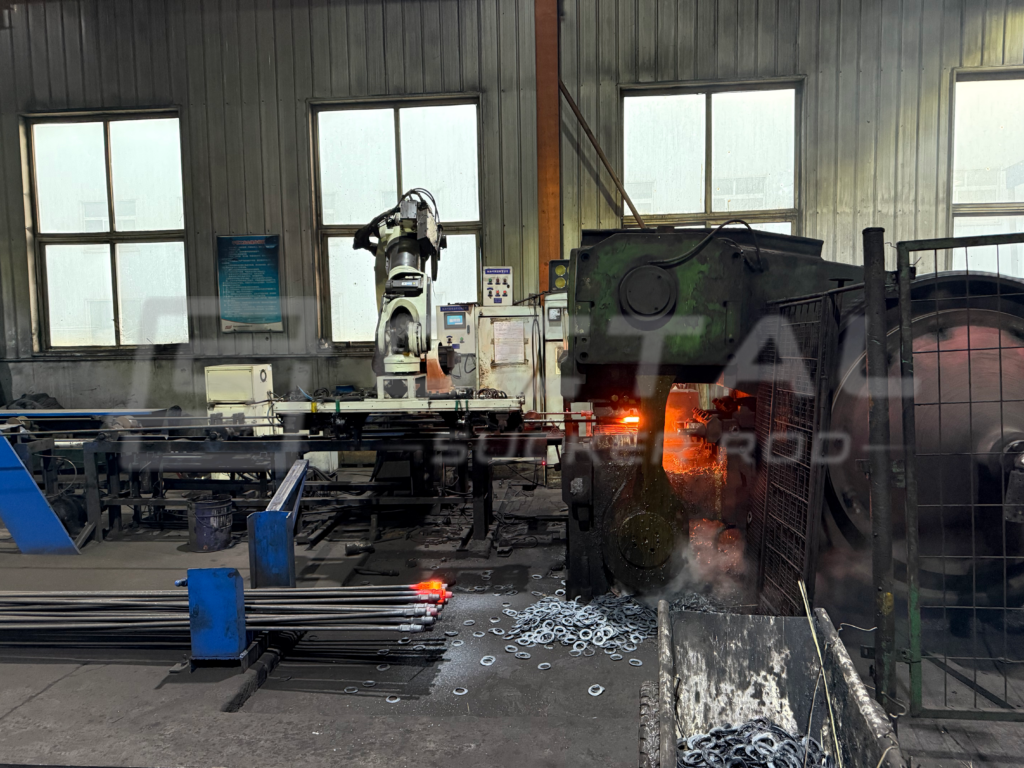
The main manufacturing stages include alloy steel preparation, hot forging of rod ends, quenching and tempering, straightening, thread machining and dimensional verification. Each process stage affects the final mechanical properties and connection performance of the sucker rod under repeated pumping loads.
High Strength Sucker Rod Manufacturing Flow
| Manufacturing Stage | Main Process | Engineering Purpose |
|---|---|---|
| Raw Material Inspection | Chemical analysis and material verification | Confirm alloy composition and steel cleanliness |
| Hot Forging | Form rod ends and upset sections | Establish required end geometry and improve forging structure |
| Heat Treatment | Quenching and tempering | Achieve target strength and toughness |
| Straightening | Controlled straightening process | Maintain rod alignment and dimensional tolerance |
| Thread Machining | Precision thread machining and gauging | Ensure proper connection fit and load transfer |
| Surface Treatment | Surface finishing when required | Improve surface condition during operation |
| Final Inspection | Mechanical and dimensional verification | Confirm compliance with technical requirements |
Raw Material and Forging Control
For high strength sucker rods, raw-material control begins with the chemical composition, hardenability and cleanliness of the alloy steel. These characteristics determine how uniformly the rod responds to subsequent quenching and tempering and directly affect the achievable combination of strength, toughness and fatigue resistance.
| Material Route | Metallurgical Characteristic | Process Relevance |
|---|---|---|
| AISI 4138M Alloy Steel | Controlled hardenability with a strength-toughness balance | Supports uniform heat-treatment response in sucker rod sections |
| AISI 4140 Alloy Steel | Higher hardenability and strength potential | Suitable for higher-strength heat-treatment routes |
| Modified Alloy Steel | Chemistry adjusted for specified mechanical properties | Used where grade-specific strength or service requirements apply |
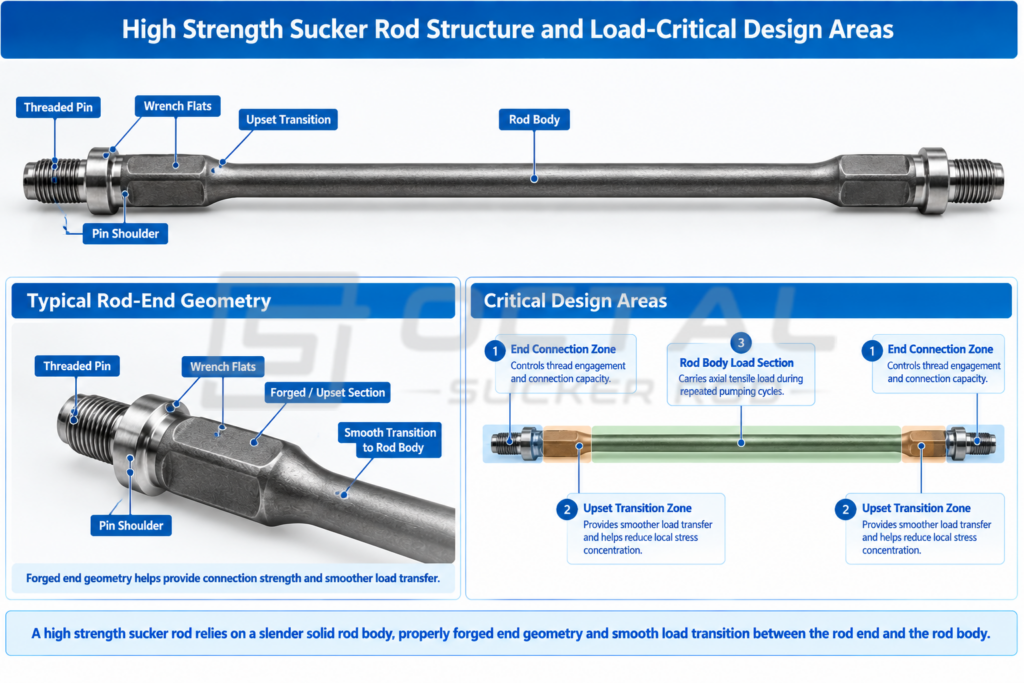
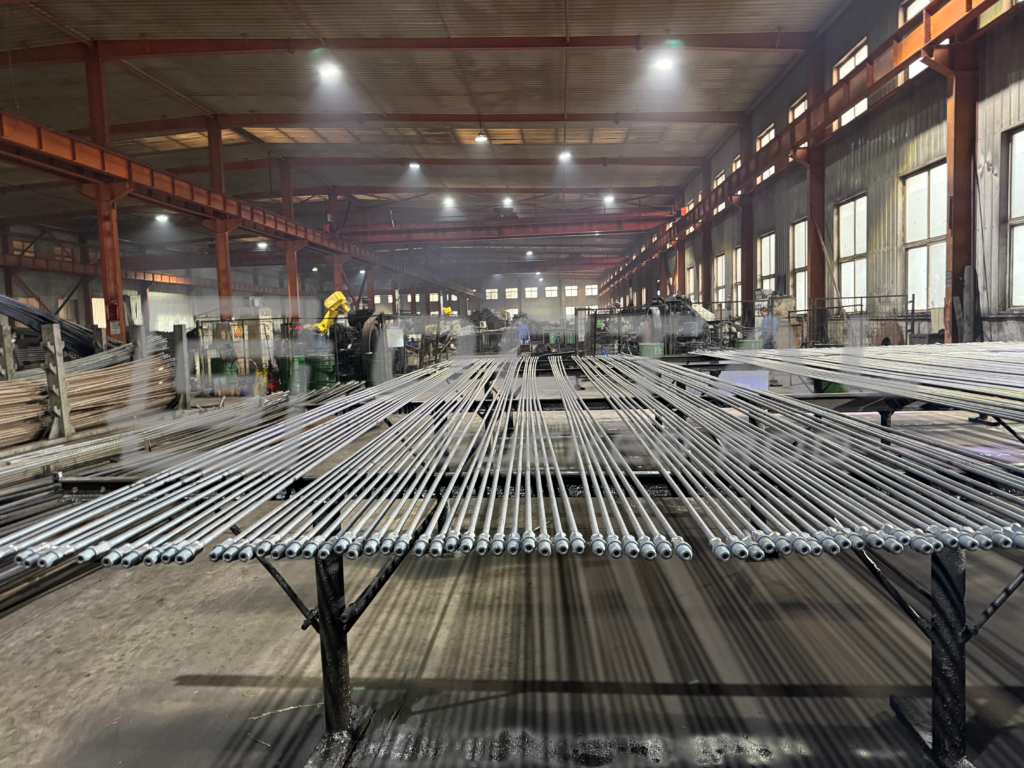
Hot forging forms the rod end, upset section and transition geometry before thread machining. Forging temperature and deformation must be controlled so that metal flow remains continuous through the upset transition and defects such as laps, folds or abrupt section changes are avoided.
The upset transition carries load between the nominal rod body and the threaded end. Because the cross-section changes in this area, poor geometry or discontinuous metal flow can create local stress concentration during cyclic pumping. A smooth forged transition therefore provides the structural basis for the subsequent heat-treatment and thread-machining stages.
Heat Treatment and Mechanical Property Development
Heat treatment determines the final strength level of high strength sucker rods by modifying the internal steel structure. The quenching and tempering process is used to achieve the required balance between yield strength, tensile strength and toughness.
Compared with conventional sucker rod grades, high strength grades require controlled heat treatment parameters because higher strength levels must be achieved while maintaining resistance to cyclic loading during continuous pumping operations.
| Heat Treatment Stage | Main Function | Effect on Sucker Rod Performance |
|---|---|---|
| Austenitizing | Creates a suitable metallurgical structure before quenching | Provides the foundation for consistent mechanical properties |
| Quenching | Increases hardness and strength level | Improves yield strength and tensile load capacity |
| Tempering | Improves toughness and reduces brittleness | Balances strength with resistance to operational stress |
| Process Control | Maintains consistent thermal parameters throughout treatment | Ensures stable mechanical performance between rod sections |
The combination of alloy steel chemistry and heat treatment determines the performance range of high strength grades such as HL and HY. Proper thermal processing allows the sucker rod to withstand higher tensile loads compared with conventional grades of the same nominal diameter.
Thread Machining and Connection Accuracy
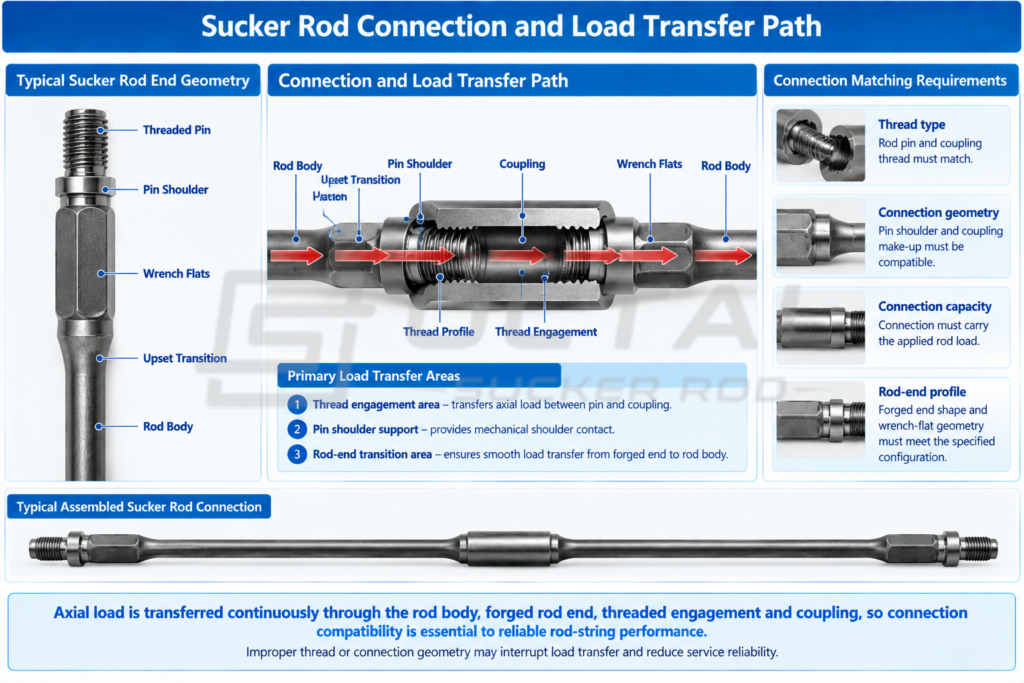
The threaded connection is the primary load transfer area between individual sucker rod sections. Connection performance depends on accurate thread geometry, proper engagement and stable shoulder contact.
| Control Item | Engineering Importance |
|---|---|
| Thread profile | Ensures proper engagement between rod and coupling |
| Thread pitch accuracy | Maintains connection compatibility |
| Thread surface finish | Reduces local stress concentration |
| Shoulder contact | Supports stable axial load transfer |
During operation, sucker rods experience repeated tensile and cyclic loads. Accurate thread machining helps distribute applied loads through the connection and reduces the risk of premature thread-related failure.
Applications of High Strength Sucker Rod
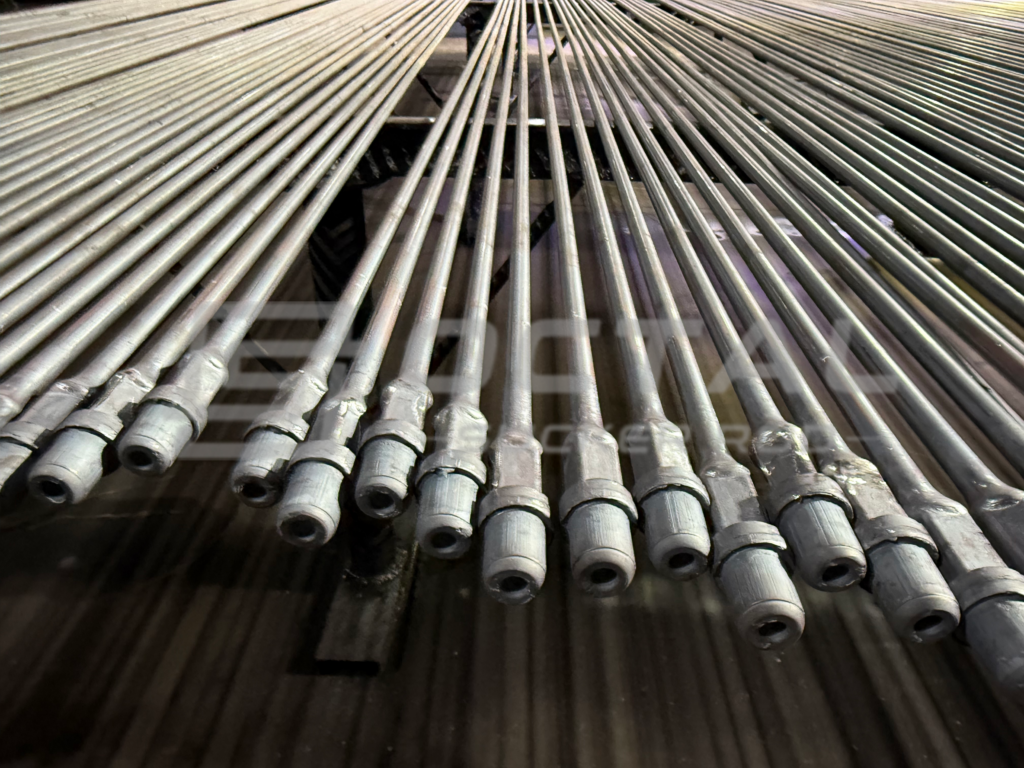
High Strength Sucker Rods are mainly used where the rod string is exposed to higher tensile demand, longer operating cycles or dimensional limits that make simply increasing rod diameter less practical. The application should be determined from the complete rod-string loading condition rather than from well depth or production rate alone.
| Application Condition | Operating Characteristics | Why High Strength Sucker Rod Is Used | Key Design Consideration |
|---|---|---|---|
| Deep Wells | Longer rod string and greater accumulated rod weight | Provides additional tensile load margin in heavily loaded rod sections | Rod-string load distribution and upper-section stress |
| Long Rod Strings | Higher axial load toward the upper part of the string | Allows higher load capacity without necessarily increasing rod diameter | Tapered rod-string design and coupling compatibility |
| Large Downhole Pumps | Higher pump load and fluid lifting force | Increases available capacity for transmitting pump load through the rod string | Pump size, fluid level and polished-rod load |
| High-Production Wells | Greater lifting requirement and sustained pumping load | Suitable where conventional grades provide limited operating margin | Production rate, pump displacement and rod-string weight |
| Long-Stroke Pumping | Greater load variation during each pumping cycle | Provides higher mechanical margin under repeated load changes | Stroke length, peak load and rod-string dynamics |
| High Pumping Frequency | Greater number of cyclic load events over time | Used where cyclic loading becomes an important design factor | Pumping speed and expected operating cycle count |
| Limited Tubing Clearance | Larger rod diameter may reduce available clearance | Higher-strength grades can increase load capacity within the same nominal rod size | Rod diameter, coupling OD and tubing ID |
| Tapered Rod Strings | Different rod sections carry different levels of axial load | High-strength grades can be placed in the sections carrying the greatest load | Grade transition, rod diameter and connection compatibility |
| Deviated Wells | Additional bending and rod-tubing contact may occur | Higher-strength sections may be used where combined loading increases mechanical demand | Well trajectory, tubing contact and wear condition |
High strength grades are not necessarily required throughout the entire rod string. In many designs, they are used only in the sections carrying the highest mechanical load, while other sections use conventional grades or smaller diameters to control rod-string weight and maintain tubing clearance.
How to Select High Strength Sucker Rod for Oil Wells
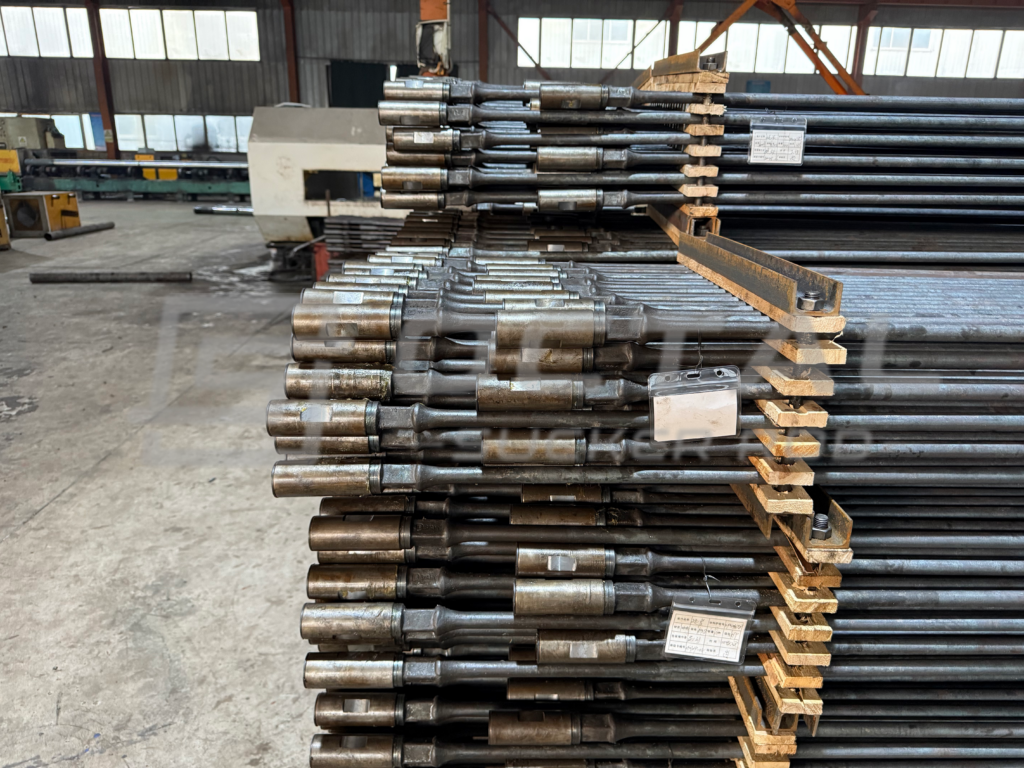
Selecting a High Strength Sucker Rod starts after the well operating conditions have shown that a conventional sucker rod grade may not provide sufficient load margin. The next step is to determine the required rod grade, nominal diameter, connection configuration and rod-string arrangement from the actual mechanical and dimensional requirements of the well.
Rather than selecting the highest available strength grade, the rod should be matched to the calculated load carried by each section of the string and to the available space inside the tubing.
| Selection Input | Engineering Check | Selection Decision |
|---|---|---|
| Calculated Rod-String Load | Compare maximum operating load with the allowable capacity of the selected grade and diameter | Determine required strength grade |
| Nominal Rod Diameter | Check cross-sectional area, rod weight and available tubing clearance | Select 5/8 in, 3/4 in, 7/8 in, 1 in or 1-1/8 in size |
| Rod-String Load Distribution | Identify which sections carry the highest tensile load | Determine whether high-strength rods are required throughout the string or only in selected sections |
| Coupling and Thread Connection | Confirm thread compatibility, coupling size and connection capacity | Match rod end and coupling configuration |
| Tubing Inside Diameter | Verify clearance between rod/coupling and tubing | Confirm that selected diameter and coupling envelope are suitable |
| Tapered Rod-String Design | Compare load levels at upper, middle and lower sections | Combine different rod diameters or grades where appropriate |
| Well Fluid and Service Environment | Check corrosion, wear and rod-tubing contact conditions | Determine whether material or surface protection requirements need adjustment |
| Existing Pumping System | Confirm compatibility with polished rod, pumping unit and downhole pump | Finalize the complete rod-string configuration |
A high-strength grade does not need to be used throughout the entire rod string. In a tapered design, HL or HY rods may be placed in the upper or more heavily loaded sections, while lower-load sections use conventional grades or smaller diameters to reduce total rod-string weight.
The final selection should therefore be based on load distribution and system compatibility, not on grade designation alone. Increasing material strength without checking rod diameter, coupling capacity and tubing clearance can simply move the limiting point from the rod body to another part of the rod string.
High Strength Sucker Rod Supply and Technical Support
Octal supplies High Strength Sucker Rods for deep-well and high-load rod pumping systems, with available configurations covering different rod diameters, lengths, strength grades and connection requirements. Rod specifications can be coordinated with matching couplings and other rod-string components to maintain compatibility across the complete pumping system.
Technical support covers specification review, grade and material confirmation, connection matching and production documentation. According to project requirements, Octal can also provide traceable records for material identification, mechanical properties, dimensional inspection and product marking, helping procurement and engineering teams verify the supplied sucker rods before field installation.
FAQ
What is the difference between a High Strength Sucker Rod and a Grade D sucker rod?
Grade D sucker rods are intended for conventional medium-to-heavy rod pumping loads, while High Strength Sucker Rod grades such as HL and HY provide a higher mechanical strength range for deeper wells and more heavily loaded rod strings. The difference is not rod diameter alone; alloy composition, heat treatment and resulting mechanical properties determine how much load margin is available at the same nominal rod size.
Can a High Strength Sucker Rod increase load capacity without increasing rod diameter?
Yes. A higher-strength grade can provide greater tensile load capacity within the same nominal rod diameter, which is useful where increasing rod size would add rod-string weight or reduce tubing clearance. The final design still needs to confirm connection capacity, coupling size and the calculated load carried by that section of the rod string.
Does the entire rod string need to use High Strength Sucker Rods?
Not necessarily. In a tapered or mixed-grade rod string, high strength sucker rods can be placed in the sections carrying the highest tensile load, while lower-load sections use conventional grades or smaller diameters. This reduces unnecessary rod-string weight while maintaining sufficient mechanical capacity where the load demand is greatest.
Does a High Strength Sucker Rod also provide better corrosion resistance?
Not automatically. High mechanical strength and corrosion resistance are separate design requirements. For wells containing corrosive fluids or gases such as H₂S or CO₂, the sucker rod grade, steel chemistry, surface protection and corrosion-control program must be evaluated separately; a higher tensile-strength grade alone does not guarantee better corrosion performance.