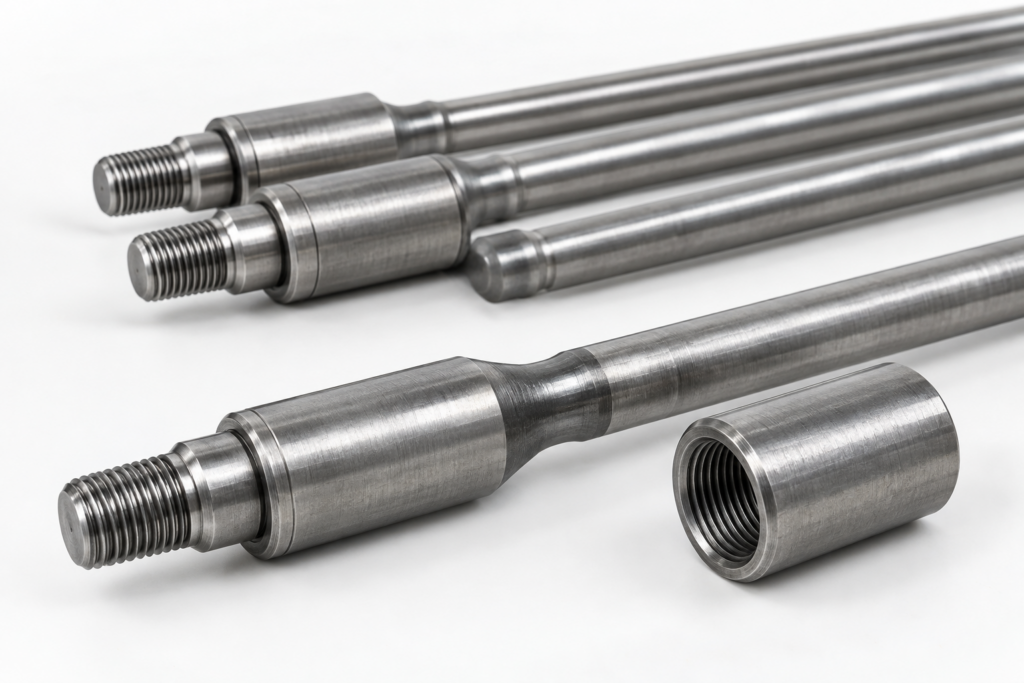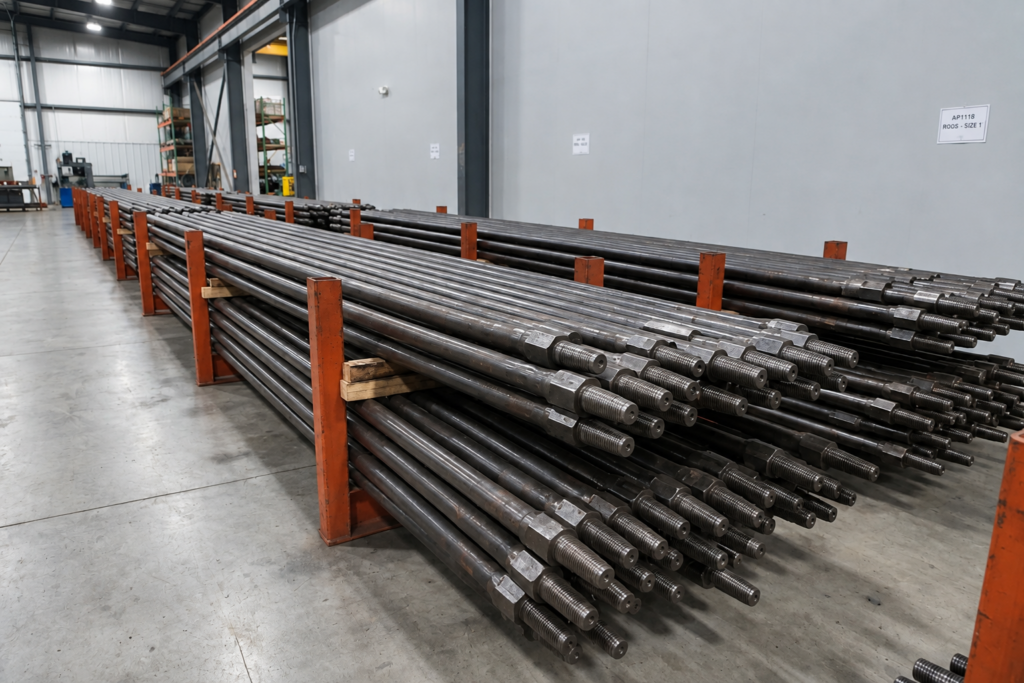
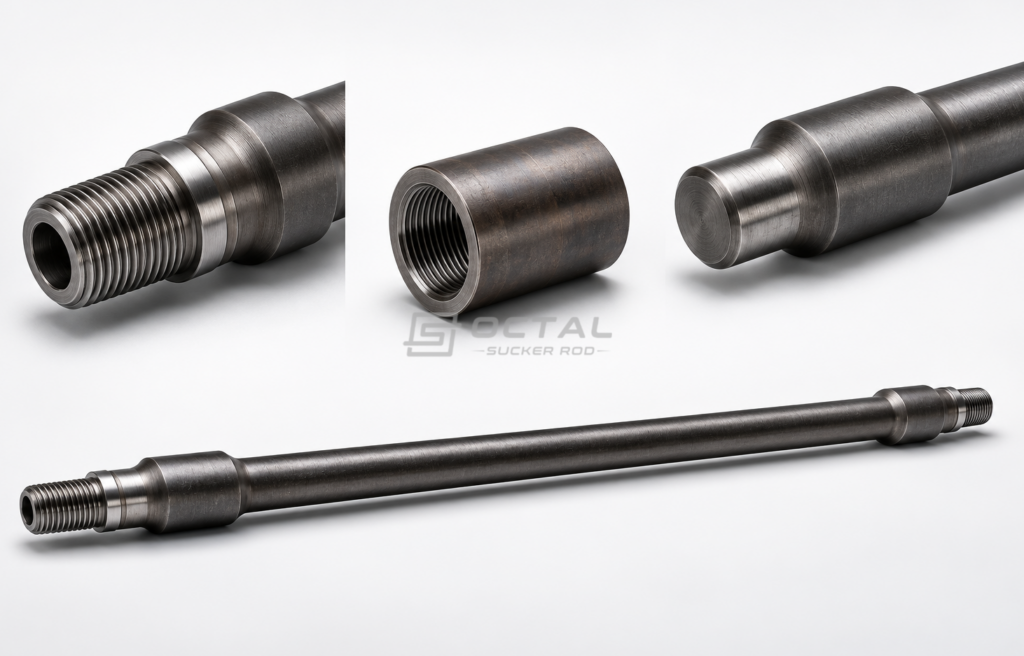
Sucker rods are key components of rod pumping systems used in artificial lift operations. Connected to the surface pumping unit through a series of threaded connections, they transmit reciprocating motion and axial loads to the downhole pump. A typical sucker rod string consists of individual rods and couplings, with each component required to withstand repeated loading throughout the pumping cycle. For more information about sucker rod functions, load transmission and operating conditions in rod pumping systems, see our guide to what sucker rods are used for.Material strength, dimensional accuracy and connection quality all influence the performance of the rod string.
During operation, sucker rods are exposed to produced fluids that may contain water, dissolved salts, carbon dioxide (CO₂), hydrogen sulfide (H₂S) and other corrosive substances. Corrosion occurs when the steel surface comes into contact with an aqueous environment containing these reactive components. The severity of corrosion depends on factors such as water chemistry, chloride concentration, pH, temperature, gas partial pressure and operating conditions. Wells with high water production, elevated salinity or significant CO₂ and H₂S content may present more demanding corrosion conditions for sucker rod materials.
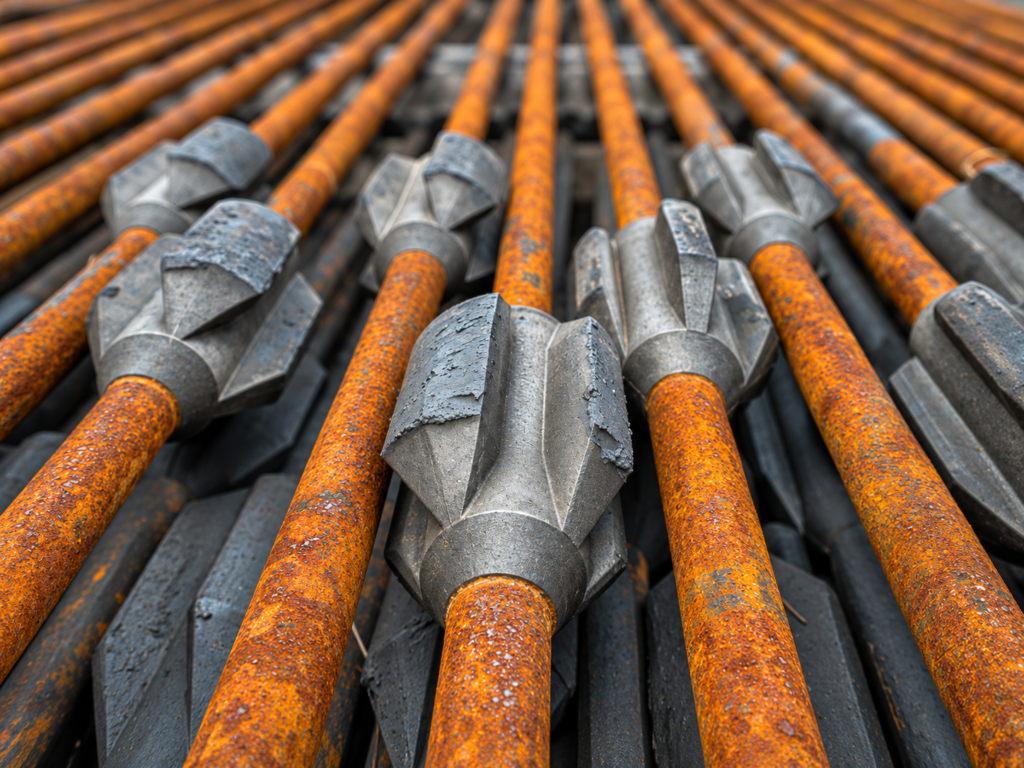
Under these conditions, corrosion can gradually alter the steel surface and affect the mechanical integrity of the rod string. General metal loss reduces the effective cross-sectional area, while localized pitting creates surface cavities that may become stress concentration points. When these defects interact with the repeated axial loading experienced during pumping, they can accelerate fatigue crack initiation and propagation. Understanding these processes requires examining the main corrosion mechanisms, their effects on sucker rod materials and the measures used to control corrosion and maintain service performance.
What Causes Corrosion in Sucker Rods?
The severity and characteristics of sucker rod corrosion depend largely on the chemical composition of produced fluids and the conditions inside the well. Among the most influential factors are dissolved CO₂, H₂S, chloride ions and other dissolved substances. Each can affect steel surfaces through different chemical or electrochemical mechanisms, resulting in distinct forms of corrosion and material damage.
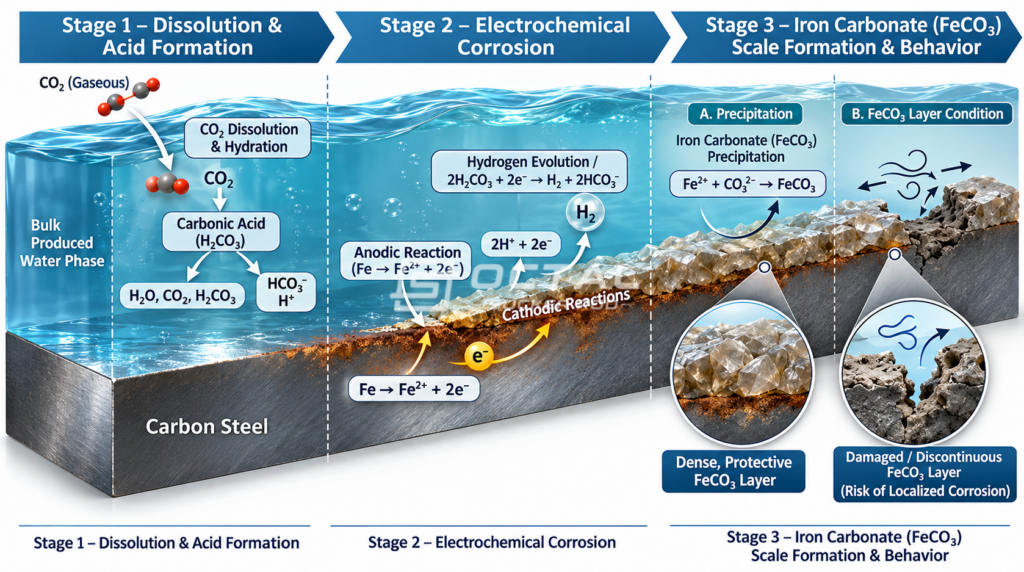
Carbon dioxide is an important corrosion factor in oil and gas production systems. When CO₂ dissolves in produced water, it forms carbonic acid species that lower the pH and promote electrochemical reactions on carbon and low-alloy steel surfaces. The severity of CO₂ corrosion depends on several factors, including CO₂ partial pressure, temperature, water chemistry and fluid flow conditions. Chloride concentration and pH influence the corrosive environment, while fluid movement affects the formation and stability of corrosion-product layers.
One important corrosion product is iron carbonate (FeCO₃). Under suitable temperature and chemical conditions, it can form a protective layer on the steel surface, reducing direct contact with corrosive fluids. However, the protective effect depends on the continuity and stability of this layer. If it becomes damaged or uneven, exposed areas of steel may remain vulnerable to further corrosion.
Experimental testing under simulated oilfield conditions showed that sucker rod corrosion rates were affected by temperature, CO₂ partial pressure and chloride concentration. Within the tested ranges of 60–120°C, 0.1–0.3 MPa CO₂ partial pressure and 1–3 g/L chloride concentration, the maximum corrosion rate reached 0.9391 mm/year at 90°C. Higher CO₂ partial pressure and chloride concentration also increased the corrosion rate under the tested conditions.
These results show that CO₂ corrosion cannot be evaluated based on temperature alone. The interaction between dissolved CO₂, produced-water chemistry, fluid movement and corrosion-product film stability determines the extent of steel deterioration.
H₂S-Related Corrosion and Hydrogen Damage
Hydrogen sulfide (H₂S) creates additional corrosion and cracking risks in sour oil wells. When H₂S dissolves in produced water, it contributes to electrochemical reactions on the steel surface and can lead to the formation of iron sulfide corrosion products.
Another concern is hydrogen entry into the steel. During corrosion reactions, some hydrogen can enter the metal and contribute to cracking or loss of ductility. The risk depends on the steel composition, strength, microstructure, applied stress and surrounding environment.
Three important forms of hydrogen-related damage should be distinguished:
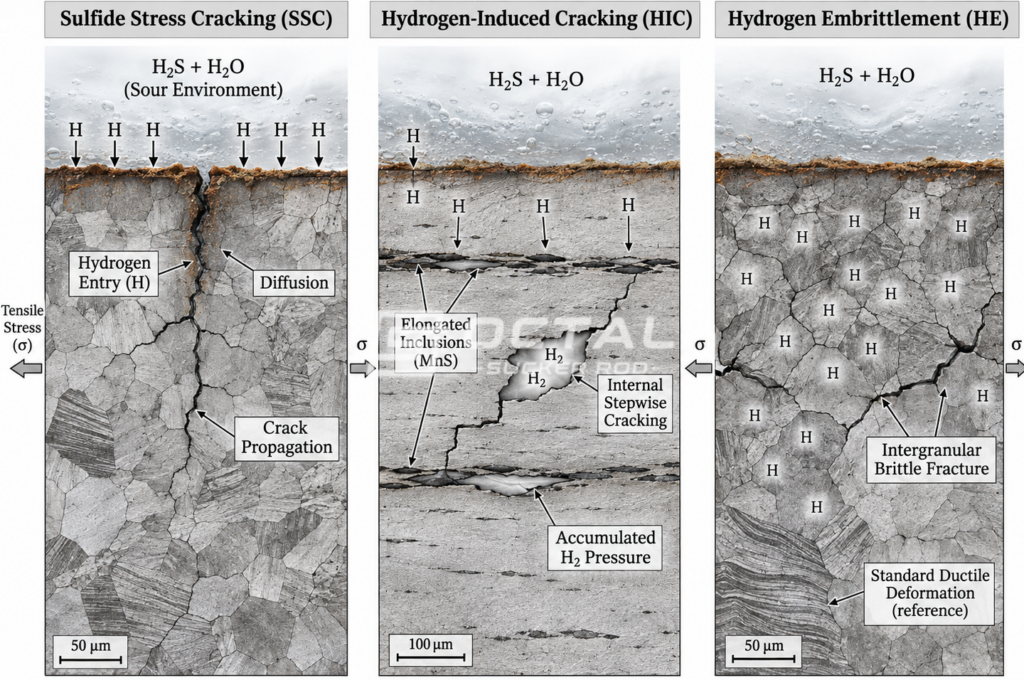
- Sulfide Stress Cracking (SSC): Cracking of susceptible materials under tensile stress in an H₂S-containing environment.
- Hydrogen-Induced Cracking (HIC): Internal cracking caused by hydrogen accumulation in susceptible steel, often around inclusions or other internal discontinuities.
- Hydrogen Embrittlement: Loss of ductility and resistance to fracture associated with hydrogen entering the metal.
Although these mechanisms are related to hydrogen exposure, they have different damage characteristics and should not be treated as interchangeable.
For sucker rods operating in sour wells, material strength, heat treatment and environmental compatibility all need to be considered. Higher tensile strength alone does not guarantee better resistance to H₂S-related cracking. Material selection should be based on the actual well conditions and applicable sour-service requirements.
Produced Water and Chloride Effects
Produced water often contains dissolved salts and ions that can change the corrosion conditions around sucker rods. Its composition varies from well to well, so two wells using the same sucker rod material may still show different corrosion behavior.
Chloride ions (Cl⁻) are especially important because they can damage protective films on the steel surface and promote localized pitting. Once pits begin to form, the affected areas become weaker and more sensitive to repeated loading during pumping.
Bicarbonate ions (HCO₃⁻) also influence the chemical balance of produced water. Together with pH, CO₂ and other dissolved components, bicarbonate affects the formation and stability of corrosion products on the steel surface.
The effect of chloride on sucker rod fatigue life is shown in the experimental data below.
Microbiologically Influenced Corrosion
In some oilfield environments, microorganisms can also influence corrosion behavior.
Sulfate-reducing bacteria (SRB), for example, can participate in biological processes that produce sulfide and alter the chemistry near the steel surface. Microbial activity may contribute to localized corrosion and under-deposit damage.
However, microbial corrosion should not be assumed simply because a well contains sulfide or has experienced corrosion. Water sampling, microbiological testing and examination of corrosion deposits are needed to establish whether microbial activity is contributing to the damage.
Main Forms of Corrosion Damage in Sucker Rods
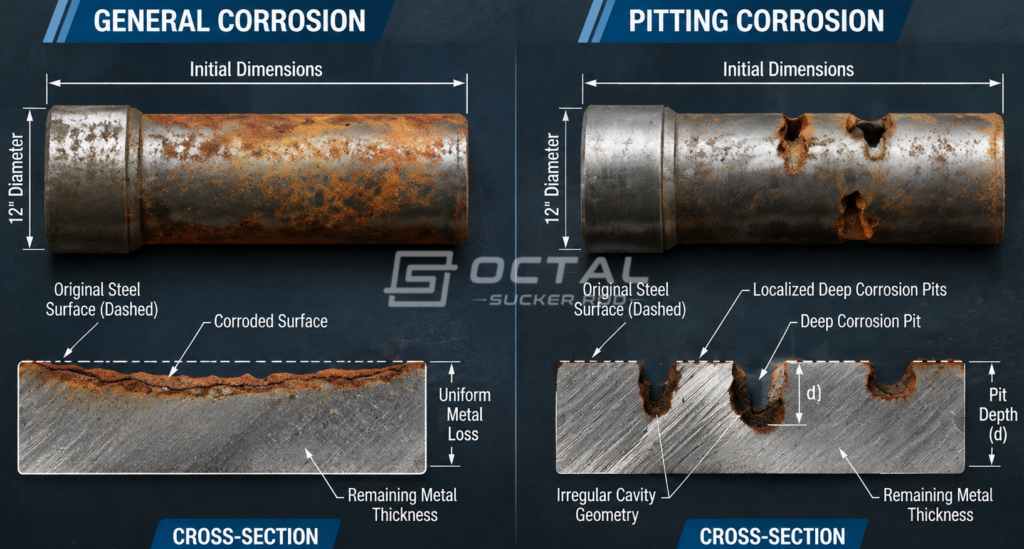
Corrosion does not always damage sucker rods in the same way. Some corrosion removes material relatively evenly from the surface, while other forms attack small areas and create deeper pits. These different damage patterns affect the rod in different ways.
General Corrosion
General corrosion causes relatively uniform metal loss over a wider area of the rod surface. As the steel gradually becomes thinner, the effective cross-sectional area decreases and the rod has less material available to carry the applied load.
The severity of this damage depends on the corrosion rate and the length of time the rod remains exposed to the corrosive environment.
Pitting Corrosion
Pitting corrosion is more localized. Instead of removing metal evenly, it creates small cavities or deeper pits in specific areas of the steel surface.
These pits are important because they weaken the rod locally and create stress concentration points. Under repeated pumping loads, cracks can begin at these damaged areas and continue to grow with each load cycle.
For this reason, pit depth and location can be more important than the total amount of visible surface corrosion when evaluating sucker rod condition.
How Does Corrosion Reduce Sucker Rod Fatigue Resistance?
Sucker rods experience repeated changes in axial load during every pumping cycle. Over time, this cyclic loading can cause fatigue damage even when the applied stress remains below the material’s static tensile strength.
Corrosion makes this process more severe by changing the steel surface. Pits and other localized damage create areas of higher stress, where fatigue cracks can begin more easily. Once a crack forms, repeated pumping loads can drive it deeper into the rod until the remaining section can no longer carry the load.
From Corrosion Pits to Fatigue Cracks
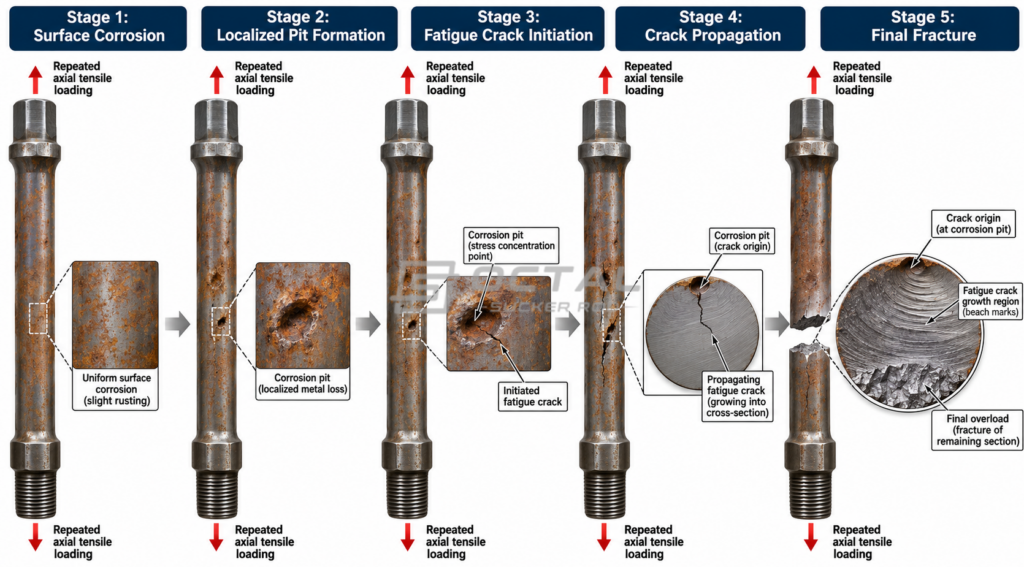
Corrosion damage can gradually develop into fatigue cracks when sucker rods are subjected to repeated pumping loads. The process usually involves several stages, from initial surface corrosion to final fracture.
1. Surface Corrosion: Produced fluids react with the steel surface, causing corrosion and gradual material deterioration.
2. Pit Formation: Localized corrosion creates small cavities or deeper pits on the rod surface. These defects reduce the local cross-sectional area and create stress concentration points.
3. Crack Initiation: Repeated axial loading causes higher stress around corrosion pits, where small fatigue cracks may begin to form.
4. Crack Propagation: As pumping cycles continue, repeated loading drives the cracks deeper into the steel, gradually reducing the remaining load-bearing section.
5. Final Fracture: When the remaining steel section can no longer withstand the applied load, the sucker rod may fracture.
This process explains how localized corrosion can develop into a serious mechanical failure. The combination of corrosion damage and repeated axial loading is a major factor in sucker rod corrosion fatigue.
Experimental Data: Chloride Concentration and Fatigue Life of 4330 Sucker Rods
Laboratory tests on 4330 alloy steel sucker rods examined how chloride-containing solutions affect fatigue life under repeated axial loading. The tests used low-frequency cyclic loading to simulate the repeated stress experienced by sucker rods during pumping operations.
Main Test Conditions
| Test Parameter | Value |
| Material | 4330 Alloy Steel |
| Maximum Stress | 750 MPa |
| Minimum Stress | 450 MPa |
| Stress Ratio (R) | 0.6 |
| Test Frequency | 0.05 Hz |
| Repetitions per Condition | 3 |
Fatigue Life at Different Chloride Concentrations
| Test Environment / Chloride Concentration | Average Fatigue Life (Cycles) |
| Air Reference | 229,400 |
| 1,000 mg/L Cl⁻ | 87,700 |
| 3,000 mg/L Cl⁻ | 86,900 |
| 5,000 mg/L Cl⁻ | 62,000 |
| 10,000 mg/L Cl⁻ | 65,800 |
| 25,000 mg/L Cl⁻ | 75,500 |
| 40,000 mg/L Cl⁻ | 62,500 |
The results show a substantial difference between the air reference group and the specimens tested in chloride-containing solutions. At 1,000 mg/L Cl⁻, the average fatigue life decreased from 229,400 to 87,700 cycles, a reduction of approximately 61.8% under the same loading conditions.
Fatigue life did not decrease continuously as chloride concentration increased. Instead, the results fluctuated across the tested concentrations, showing that corrosion fatigue is influenced by the overall test environment rather than chloride concentration alone.
For sucker rods operating in high-salinity wells, these findings highlight the importance of considering produced-water chemistry alongside material strength and cyclic loading. Corrosion can damage the rod surface and make fatigue cracks more likely to develop during repeated pumping cycles.
What Does Field Failure Analysis Reveal About Sucker Rod Corrosion?
Laboratory tests help explain how corrosion affects steel, while actual field investigations show the damage that can occur under operating conditions. In one field case, 3130 alloy steel sucker rods experienced severe corrosion and fractured after approximately one year of service, despite meeting the applicable material composition requirements.
The investigation identified high-salinity, sulfur-containing produced water as the main corrosive environment. Significant localized corrosion and deep pits were also found on the rod surfaces.
The main inspection results are summarized below:
| Inspection Item | Reported Result |
| Failed Rod Material | 3130 Alloy Steel |
| Approximate Service Period | 1 Year |
| Average Corrosion Rate | 1.6986 mm/year |
| Maximum Pitting Depth | 3.5 mm |
| Main Corrosion Products | FeCO₃, Fe₇S₈ and CaCO₃ |
| Main Environmental Factors | High-Salinity, Sulfur-Containing Produced Water |
The measured corrosion rate of 1.6986 mm/year and maximum pit depth of 3.5 mm indicate severe corrosion damage under these specific conditions. The findings show that produced-water chemistry can significantly affect sucker rod performance, even when the steel meets its specified material requirements.
Material Properties Affect Sucker Rod Corrosion Resistance
The steel used to manufacture sucker rods affects their strength, toughness and resistance to corrosion. Different steel grades can perform differently under the same downhole conditions. In addition to chemical composition, heat treatment and surface quality also influence how well a sucker rod withstands corrosive fluids and repeated pumping loads.The selection of sucker rod steel also requires an understanding of the differences between carbon steel and alloy steel, including their chemical composition, heat-treatment response and mechanical properties. See our guide to sucker rod materials for a closer comparison of the available steel options.
Steel Chemistry and Alloying Elements
The chemical composition of steel affects its mechanical properties and corrosion behavior. Alloying elements such as chromium, nickel and molybdenum influence strength, hardenability and the steel’s response to corrosive environments. Their effects depend on the actual alloy content, heat treatment and surrounding well conditions.
A comparative corrosion investigation of three sucker rod steel grades showed different levels of corrosion resistance under the tested conditions. 4330A alloy steel showed the best corrosion resistance, followed by 25CrMoA and 3130 steel.
| Steel Grade | Relative Corrosion Resistance |
| 4330A Alloy Steel | Highest |
| 25CrMoA Alloy Steel | Intermediate |
| 3130 Alloy Steel | Lowest |
This comparison shows that steel grade and chemical composition can influence sucker rod performance in corrosive wells. However, the ranking applies to the specific test conditions and should not be treated as a universal ranking for all oilfield environments.
Steel material designations and finished sucker rod grades represent different classification systems. For a comparison of API 11B sucker rod grades, their mechanical properties and typical material compositions, see our guide to sucker rod grades.
Heat Treatment and Microstructure
Heat treatment determines the final strength, hardness and internal structure of sucker rod steel. Quenching and tempering are commonly used to achieve the required mechanical properties. Improper control of heating, cooling or tempering conditions can result in uneven hardness and microstructure, affecting the rod’s toughness and fatigue resistance.
Consistent heat treatment helps maintain uniform mechanical properties along the rod body, which is important when the rod is subjected to repeated tensile loading during pumping operations.
Surface Condition and Material Defects
The steel surface also affects corrosion performance. Scratches, machining marks and other surface defects can create locations where corrosion begins more easily. Non-metallic inclusions within the steel may also contribute to localized corrosion and crack initiation, depending on their size, distribution and surrounding microstructure.
Once corrosion pits develop, they can weaken the local section of the rod and create starting points for fatigue cracks under repeated loading. Proper control of steel cleanliness, surface finishing and manufacturing quality helps reduce these risks.
Overall, sucker rod corrosion resistance depends on steel composition, heat treatment and surface quality working together. Material selection and manufacturing control should both be considered when evaluating sucker rods for corrosive oil wells.
Methods for Controlling Sucker Rod Corrosion
Sucker rod corrosion control should be based on the actual well environment. Produced-water chemistry, CO₂ and H₂S content, operating temperature and rod loading all affect which protection method is suitable. In practice, corrosion control usually combines material selection, chemical treatment, surface protection and regular inspection.
| Corrosion Control Method | How It Helps | Key Considerations |
| Corrosion Inhibitors | Reduce corrosion reactions by forming a protective film on the steel surface. | Dosage and injection frequency should match produced-water chemistry, temperature and CO₂/H₂S conditions. |
| Protective Coatings | Reduce direct contact between the steel and corrosive fluids. | Coating adhesion and wear resistance are important because rod and tubing contact can damage the protective layer. |
| Material Selection | Improves resistance to the specific corrosion environment while maintaining required mechanical properties. | Steel grade, heat treatment, hardness and sour-service conditions should be considered together. |
| Produced-Water Monitoring | Identifies changes in chloride, pH, dissolved gases and other factors that can increase corrosion. | Water chemistry should be checked regularly because operating conditions may change during production. |
| Inspection and Maintenance | Detects surface corrosion, pitting and metal loss before serious failure develops. | Visual inspection, dimensional checks and pit-depth measurements can be combined with further failure analysis when needed. |
No single method can eliminate every corrosion risk. The most effective approach is to match the material and protection method to the actual well conditions, then confirm their performance through regular monitoring and inspection.
How to Select Sucker Rods for Corrosive Oil Wells?
Selecting sucker rods for corrosive wells should consider both well conditions and mechanical loading. Water chemistry, CO₂ and H₂S content, temperature and expected rod-string stress all affect material selection and service performance.
| Selection Factor | What to Check |
| Well Environment | Chloride content, pH, CO₂, H₂S, temperature and produced-water composition |
| Mechanical Requirements | Tensile strength, yield strength, hardness, fatigue resistance and expected rod load |
| Material Suitability | Steel grade, heat treatment and compatibility with corrosive or sour-service conditions |
| Quality Records | Chemical composition, mechanical test results, heat-treatment records, dimensional inspection and traceability |
For wells containing H₂S, material suitability should also be checked against the applicable sour-service requirements, including ISO 15156 where relevant.
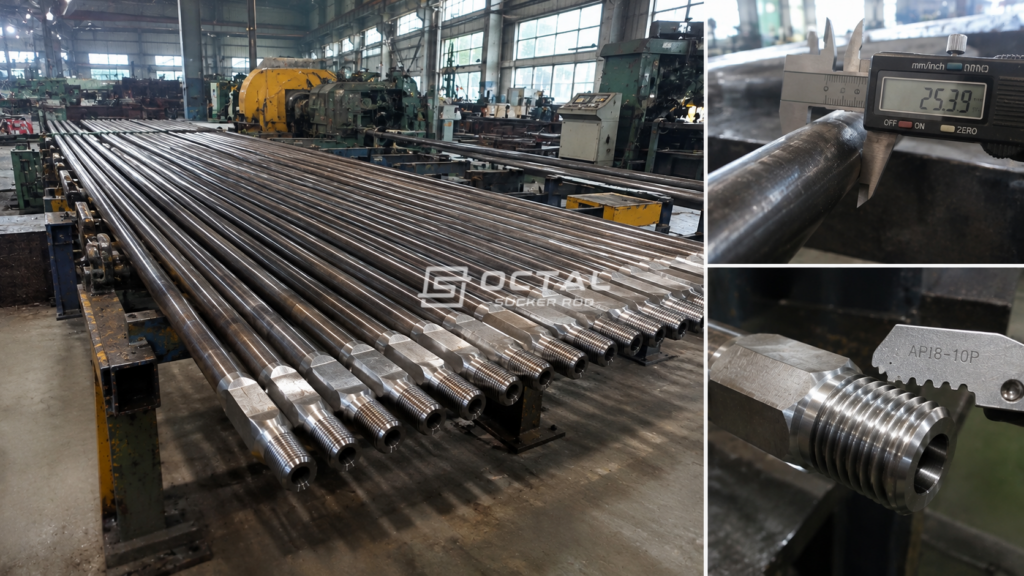
The final selection should match the sucker rod’s mechanical properties to the actual downhole environment rather than relying on steel grade or strength alone.
Conclusion
Corrosion affects sucker rod performance through several interconnected mechanisms. CO₂, H₂S and produced-water chemistry influence the corrosion environment, while chloride-induced pitting and other surface defects can increase local stress concentration. Under repeated pumping loads, these damaged regions may become sites of fatigue crack initiation and propagation.
Experimental studies on 4330 sucker rods demonstrate that corrosive solutions can substantially reduce fatigue life under controlled test conditions. Field failure investigations further show that severe localized corrosion can develop even when the original steel meets its specified chemical composition requirements.
For reliable downhole performance, sucker rod selection should consider produced-water chemistry, material properties, heat-treatment condition, surface quality and operating loads together. Regular inspection and appropriate corrosion-control measures are also necessary to identify deterioration before it develops into a major mechanical failure.
FAQ
1. What is the main cause of sucker rod corrosion?
CO₂, H₂S and chloride-containing produced water are important corrosion factors. Their effects depend on water chemistry, temperature, pressure and material condition. Corrosion can develop through uniform metal loss, localized pitting and hydrogen-related damage.
2. How does chloride affect sucker rod fatigue life?
Chloride can promote localized corrosion and damage protective surface films. The resulting corrosion pits may act as stress concentration points under cyclic loading. A 2024 study of 4330 sucker rods found substantially lower fatigue life in chloride-containing solutions than in its air-tested reference group.
3. Can H₂S cause sucker rod cracking?
Yes. In susceptible materials and suitable sour-service conditions, H₂S-related hydrogen entry can contribute to sulfide stress cracking and other hydrogen-related damage. Material qualification, tensile stress and environmental severity all influence the risk.
4. How can corrosion damage in sucker rods be detected?
Visual inspection, dimensional measurements and pit-depth measurements can identify surface deterioration. SEM/EDS, metallographic examination and mechanical testing can provide further evidence when investigating suspected corrosion-related failures.