
A sucker rod is a steel rod used in oil well artificial lift systems to transmit reciprocating motion and mechanical loads from the surface pumping unit to the downhole pump. Sucker rods are classified into different grades based on their mechanical strength, material composition, and service requirements.Sucker rod grades define the mechanical strength, steel material requirements, and service characteristics of rods used in reciprocating artificial lift systems. API 11B covers conventional grades such as C, K, and D-family sucker rods, while higher-strength and special-service products are available for more demanding rod-string designs. The principal differences involve yield strength, tensile strength, alloy composition, and the operating conditions for which the rods are selected.
Grade C and K rods typically have tensile strength requirements of 90–115 ksi (621–793 MPa), while conventional Grade D-family rods have 115–140 ksi (793–965 MPa). However, strength alone does not determine operating life. Rod diameter, cyclic loading, fluid corrosivity, heat treatment, and connection integrity also influence grade selection.
Sucker Rod Grades Overview
| Rod Grade | Minimum Yield Strength | Tensile Strength | Main Selection Consideration |
| Grade C | 60 ksi | 90–115 ksi | Standard-strength service with controlled corrosion |
| Grade K | 60 ksi | 90–115 ksi | Alloy-steel selection for corrosion-prone service |
| Grade D Carbon (DC) | 85 ksi | 115–140 ksi | Increased strength for moderate loading |
| Grade D Alloy (DA) | 85 ksi | 115–140 ksi | Higher loading with alloy-steel properties |
| Grade D Special (DS) | 85 ksi | 115–140 ksi | Special-alloy selection for demanding service |
| Grade KD | D-family requirements | Commonly 115–140 ksi | Commercial corrosion-service grade within the D-family |
| High Strength | Product-specific | Typically above conventional D grades | Heavy rod-string loading requiring specific qualification |
The conventional grade values summarize API 11B requirements reported in industry comparison guides. KD and high-strength product designations must be checked against the specified manufacturer and applicable standard edition.
Sucker Rod Grade Chart and Mechanical Properties
The sucker rod grade chart establishes the basic strength differences between standard-grade and higher-strength sucker rods. Yield strength indicates the onset of permanent deformation under tensile loading, while ultimate tensile strength identifies the maximum engineering stress reached during a tensile test.
For rod-lift applications, both values matter. The rod string experiences repeated tension as the surface pumping unit moves through each stroke. The maximum rod load must remain within the applicable operating limit, while the alternating stress affects fatigue performance over many pumping cycles.
API 11B Sucker Rod Mechanical Properties
An API 11B sucker rod must meet the applicable finished-product mechanical, dimensional, and connection requirements for the specified grade.
| Grade Classification | Yield Strength, Min. (ksi / MPa) | Tensile Strength (ksi / MPa) |
| C | 60 / 414 | 90–115 / 621–793 |
| K | 60 / 414 | 90–115 / 621–793 |
| D Carbon (DC) | 85 / 586 | 115–140 / 793–965 |
| D Alloy (DA) | 85 / 586 | 115–140 / 793–965 |
| D Special (DS) | 85 / 586 | 115–140 / 793–965 |
Note: Mechanical properties are based on API 11B grade requirements. Actual guaranteed values may vary by manufacturer and should be verified against the applicable standard edition and purchase specifications.
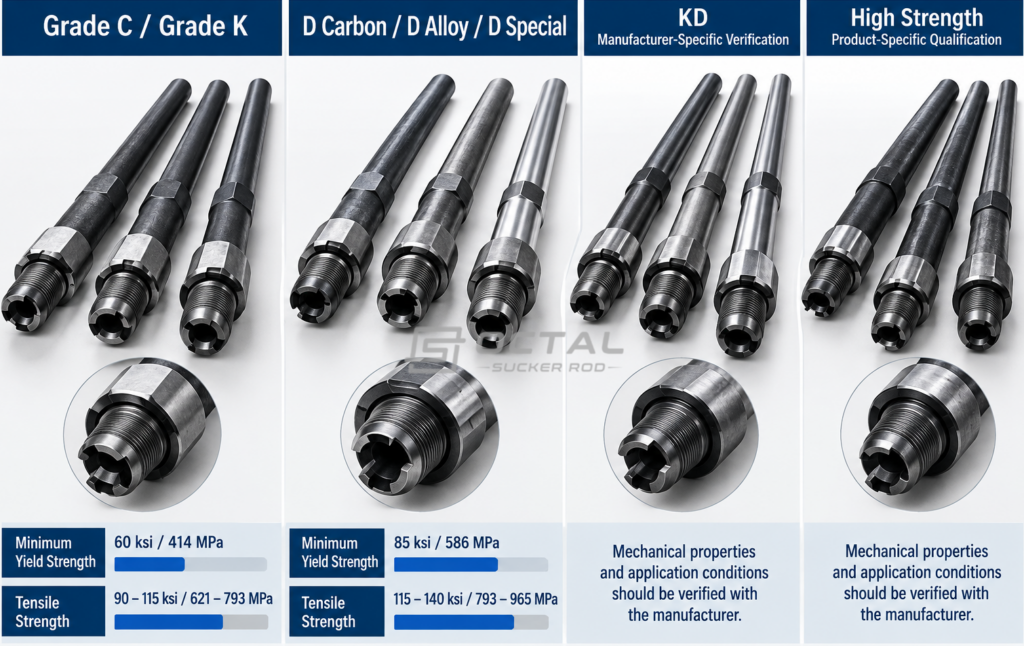
These grades can also be compared through ductility measurements, including elongation and reduction of area. The 13% minimum elongation and 40% minimum reduction of area for C and K, and 10% and 40%, respectively, for conventional D-family grades, measured under the stated test conditions. Those values should not be treated as universally mandatory requirements for every API edition or proprietary grade without confirmation.
A higher tensile strength does not automatically provide better fatigue resistance. Steel cleanliness, surface condition, rod-end geometry, heat treatment, corrosive exposure, and operating stress range may have a greater influence on long-term performance.
Types of Sucker Rod Grades
Sucker rods are available in several strength and material grades to accommodate different pumping loads, fatigue requirements, and well-fluid conditions. Grade C and Grade K are conventional-strength options, while Grade D and Grade KD provide higher mechanical strength. High-strength grades are available for applications requiring additional load capacity beyond conventional D-family products.
Sucker Rod Grades Comparison
| Sucker Rod Grade | Min. Yield Strength | Tensile Strength | Main Characteristics |
| Grade C | 60 ksi | 90–115 ksi | Conventional strength for moderate loading |
| Grade K | 60 ksi | 90–115 ksi | Alloy-steel selection for corrosion-related service |
| Grade D | 85 ksi | 115–140 ksi | Higher strength for increased rod-string loads |
| Grade KD | 85 ksi | 115–140 ksi | Higher strength with corrosion-oriented alloy selection |
| High Strength | Grade-specific | Typically above conventional D-family ranges | Specialized high-load rod-string designs |
Note: Values represent conventional grade ranges or general product classifications. High-strength specifications depend on the manufacturer and individual grade.
Grade D Material Classifications
Grade D sucker rods can be manufactured using different steel compositions and heat-treatment routes. The DC, DA, and DS classifications distinguish material approaches within the higher-strength D-family.
| Classification | Material Characteristics | Material Example |
| D Carbon (DC) | Carbon steel with controlled heat treatment | Modified 1530 steel |
| D Alloy (DA) | Alloy steel, commonly containing chromium and molybdenum | Modified 4142 steel |
| D Special (DS) | Special alloy compositions, often containing nickel, chromium, and molybdenum | Modified 4330 steel |
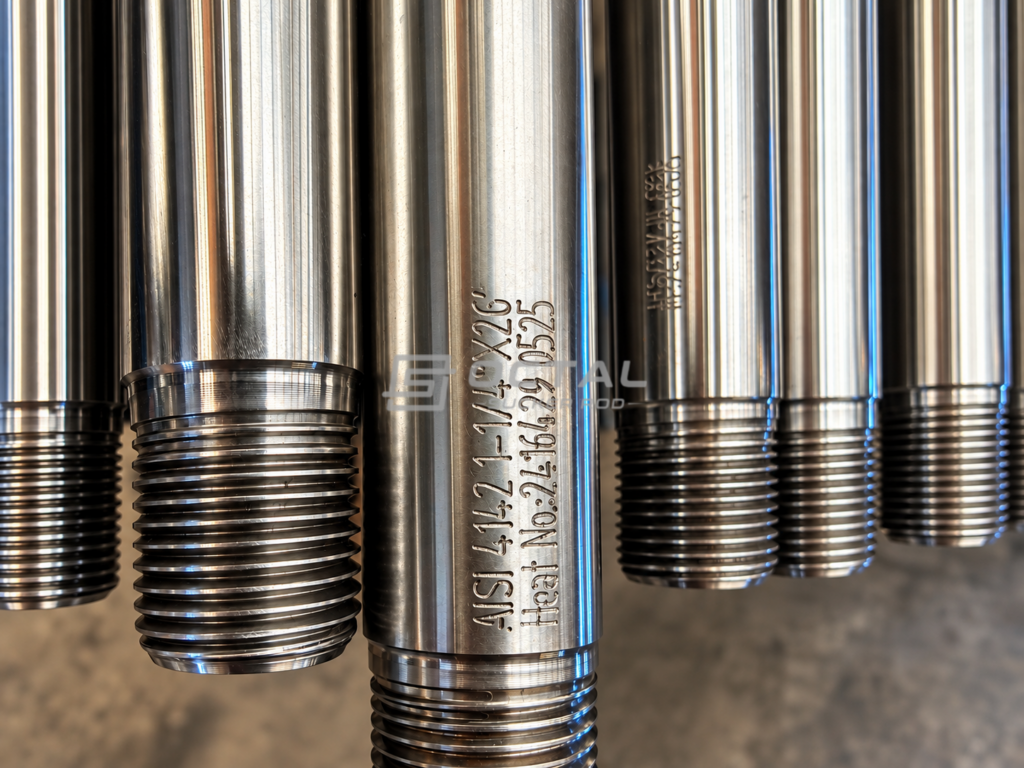
A typical AISI 4142 sucker rod material route may be used for Grade D Alloy products, but the finished grade must still be verified by testing.These material examples represent documented manufacturing options rather than mandatory compositions for every product. Mechanical-property requirements, hardness limits, and environmental qualifications must be verified against the specified grade and manufacturer.
Strength and Service Differences Between Grades
Grade C and Grade K have similar conventional strength requirements, but their material selection differs. Grade K commonly uses nickel-containing alloy steels for applications where corrosion behavior is an important consideration.
Grade D and Grade KD offer higher tensile and yield strength than Grades C and K. Grade D is generally selected for increased mechanical loading, while KD combines higher strength with alloy systems intended for corrosion-prone operating conditions. Neither designation alone guarantees suitability for H₂S or other specific corrosive environments.
High-strength sucker rod grades, including manufacturer-specific HA, HS, HL, and HY products, extend beyond conventional D-family strength ranges. Some HA and HS specifications list tensile strengths of 140–155 ksi, although requirements vary by product. Their use requires additional evaluation of fatigue performance, connection capacity, and environmental compatibility.
The appropriate grade should be selected according to actual rod-string loading, produced-fluid chemistry, fatigue conditions, and applicable API 11B requirements, rather than tensile strength alone.
Sucker Rod Material Grades and Chemical Composition
A sucker rod grade identifies the required finished-product classification, while an AISI steel grade identifies the material chemistry family. These designations are related but are not interchangeable.A sucker rod grade identifies the required finished-product classification, while sucker rod materials are identified by steel chemistry and material designation
For example, AISI 4142 and AISI 4330 are alloy-steel designations. Their use in sucker rods does not independently establish the final API grade. Required tensile properties also depend on heat treatment, finished-product testing, and the manufacturer’s approved production specification.
Typical Steel Materials and Chemical Composition
The following table uses Tenaris catalogue material examples to demonstrate the differences between selected sucker rod grades. All chemical composition values are weight percentages.
| Rod Grade | Example Steel | Carbon (C) | Nickel (Ni) | Chromium (Cr) | Molybdenum (Mo) |
| C | 1530 Mod. | 0.30–0.36 | 0.15 max. | 0.10 max. | 0.05 max. |
| K | 4621 Mod. | 0.18–0.25 | 1.65–2.00 | 0.30 max. | 0.20–0.30 |
| D Alloy | 4142 | 0.40–0.45 | 0.25 max. | 0.80–1.10 | 0.15–0.25 |
| KD | 4320 Mod. | 0.20–0.25 | 1.15–1.50 | 0.70–0.90 | 0.25–0.30 |
| D Special | 4330 Mod. | 0.29–0.37 | 1.65–2.00 | 0.80–1.10 | 0.20–0.30 |
The compositions shown above are typical material references from manufacturer catalogues. They are intended for comparison only and should not be treated as fixed API chemistry limits or confirmed Octal production specifications. Actual material selection may vary according to the required rod grade, heat treatment, and purchase specification.
Several differences are important when interpreting this chart.
Carbon content influences the material’s potential hardness and strength after heat treatment. Higher carbon content is not automatically beneficial because toughness, crack resistance, and environmental performance must also be considered.
Chromium and molybdenum contribute to hardenability and the response to controlled heat treatment. Their specified concentrations depend on the alloy system and intended mechanical properties.
Nickel is used in several corrosion-service and special-alloy materials to influence toughness and the overall alloy response. Nickel content by itself does not establish immunity to corrosion or sulfide stress cracking.
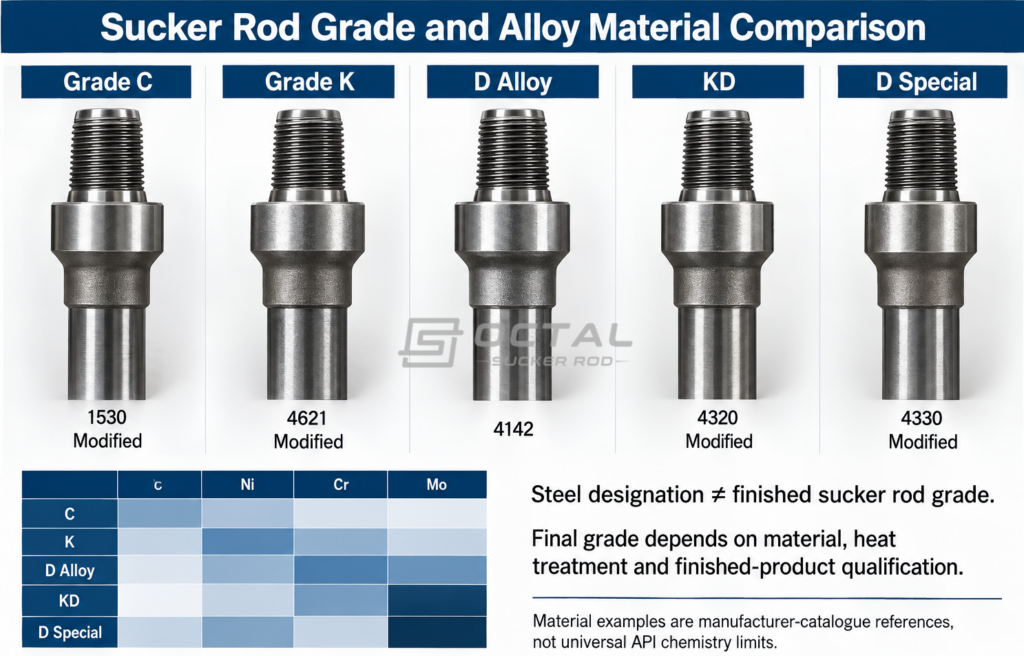
For procurement, the specified material chemistry should be verified against the applicable product specification and the actual heat-analysis certificate.
Sucker Rod Sizes and Grade Availability
Standard sucker rods are supplied in several nominal body diameters. Larger diameters increase the available load-bearing cross-section but also increase rod-string weight, which affects pumping loads and string design.
Common Sucker Rod Dimensions
| Nominal Rod Diameter | Diameter (mm) | Common Nominal Rod Lengths |
| 5/8 in. | 15.88 | 25 ft / 30 ft |
| 3/4 in. | 19.05 | 25 ft / 30 ft |
| 7/8 in. | 22.23 | 25 ft / 30 ft |
| 1 in. | 25.40 | 25 ft / 30 ft |
| 1-1/8 in. | 28.58 | 25 ft / 30 ft |
These are common conventional sucker rod dimensions; availability of a particular grade, diameter, and length combination must be confirmed.
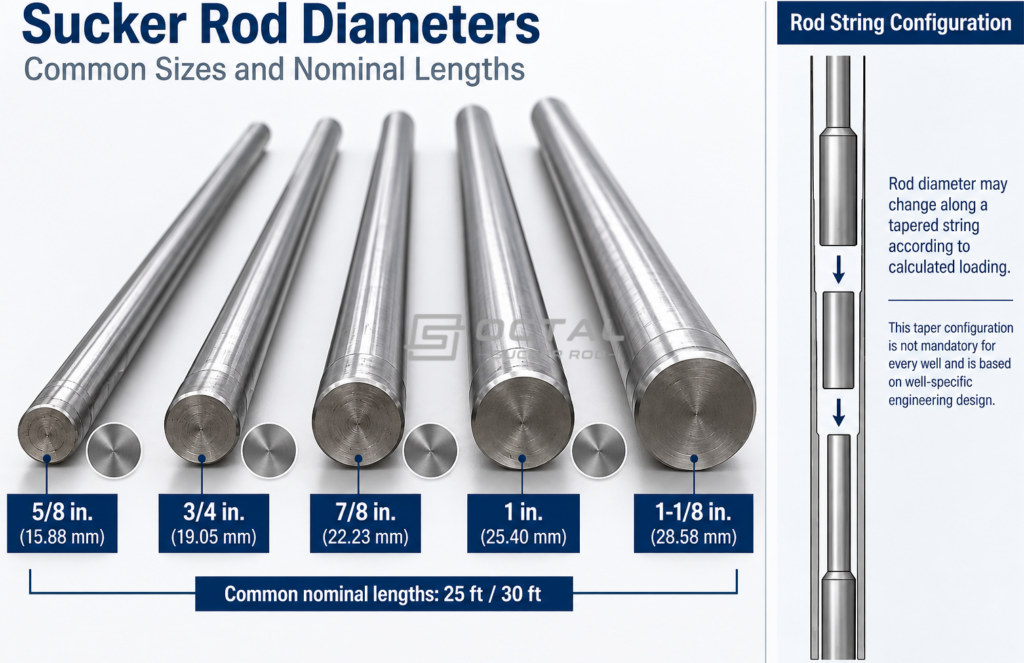
A grade designation does not specify the rod diameter, pin connection, or coupling type. These dimensions must be defined separately. For tapered rod strings, different diameters and sometimes different material grades may be selected for individual sections according to their calculated loading.
How to Select Sucker Rod Grades for Different Well Conditions
The selection of sucker rod grades begins with the actual loading and operating environment rather than nominal well depth alone.
Two wells at the same depth can require different rods because of differences in pump diameter, produced-fluid density, stroke length, strokes per minute, gas interference, corrosion, and well deviation.
Sucker Rod Grade Selection Matrix
| Operating Condition | Grades to Evaluate | Main Engineering Consideration |
| Light-to-moderate cyclic loads | Grade C | Stress range, corrosion control and fatigue |
| Moderate loads with corrosion concerns | Grade K | Fluid chemistry, inhibition and material qualification |
| Moderate-to-heavy axial loading | Grade D Carbon / D Alloy | Yield strength, fatigue and thermal-processing requirements |
| Higher loads with corrosive produced fluids | KD / qualified D Special | Corrosion fatigue, alloy composition and service limits |
| High-load or deep rod-string designs | Qualified High Strength grades | Stress spectrum, rod diameter, connection strength and fatigue |
| Deviated wells with rod/tubing contact | Grade selected by combined conditions | Contact wear, bending fatigue, corrosion and rod guides |
The matrix identifies candidate grade families for engineering evaluation; it is not an unconditional grade recommendation or substitute for rod-string design.
Rod Load and Fatigue Considerations
During each pumping cycle, the sucker rod string is subjected to repeated changes in axial load. The upper rods normally carry a larger portion of the suspended rod-string weight, while fluid load, acceleration and deceleration, pumping speed, and well deviation can further change the stress level along the string.
For a basic axial-load check, the nominal stress in the rod body can be estimated as:
σ = F / A
where σ is the nominal axial stress, F is the axial force acting on the rod, and A is the rod-body cross-sectional area.
For the same axial force, a smaller rod diameter produces a higher nominal stress. This simple calculation is useful for comparing rod sizes, but it does not represent the complete fatigue condition of a working rod string.
In service, sucker rods experience alternating maximum and minimum loads over every pumping cycle. Fatigue assessment should therefore consider the stress range, cyclic loading frequency, connection geometry, bending, and local stress concentration at the rod ends. Corrosion or produced-fluid attack can further reduce the effective fatigue resistance even when the nominal axial stress remains within an acceptable range.
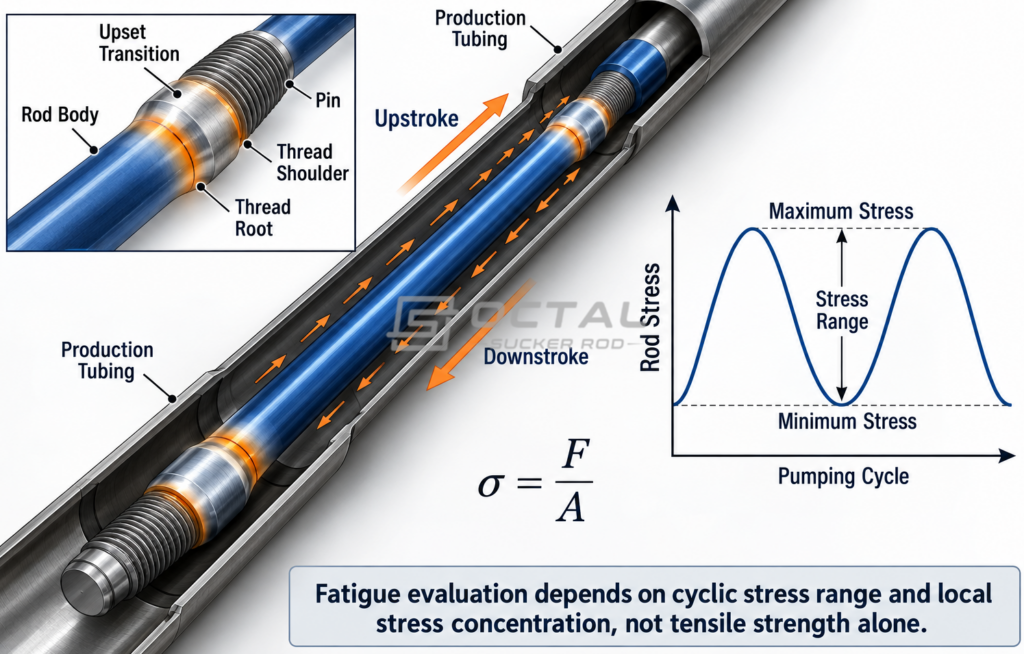
For actual rod-string design, the calculated stresses should be evaluated together with the selected rod grade, diameter, well geometry, operating loads, and service environment, rather than using tensile strength alone as the selection criterion.
Corrosion and Material Selection
Corrosion can reduce the usable fatigue strength of a sucker rod long before significant overall cross-section loss becomes visible.
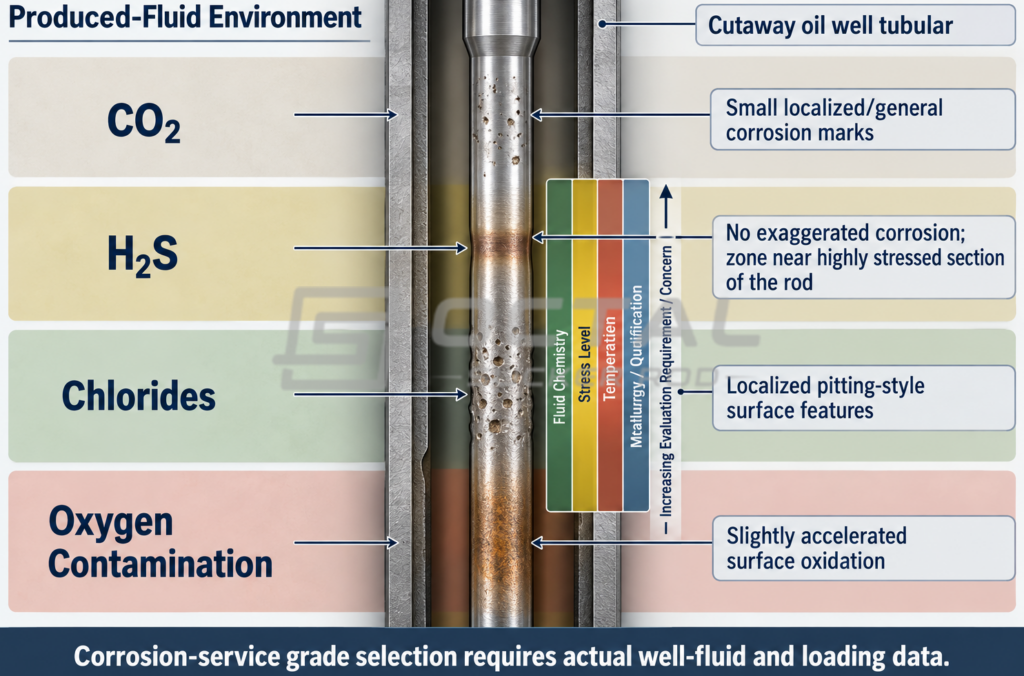
CO₂-containing produced fluids can cause localized or general corrosion depending on partial pressure, water chemistry, temperature, and protective conditions.
H₂S-containing fluids introduce additional concerns involving sulfide stress cracking and hydrogen-related damage. Materials must be evaluated against the actual sour-service environment, hardness, stress level, and applicable material qualification requirements.
Chloride-containing water and oxygen contamination can intensify corrosion under certain production and chemical-treatment conditions.
Grades K and KD are often considered for corrosion-related applications, but neither should be selected on the assumption that the grade name guarantees resistance to every corrosive fluid.
Before substitution or upgrading, review actual fluid analysis, corrosion history, inhibitor performance, and documented service restrictions.
Rod Connections and Load Transfer
Higher rod-body strength does not eliminate connection-related failure risks.
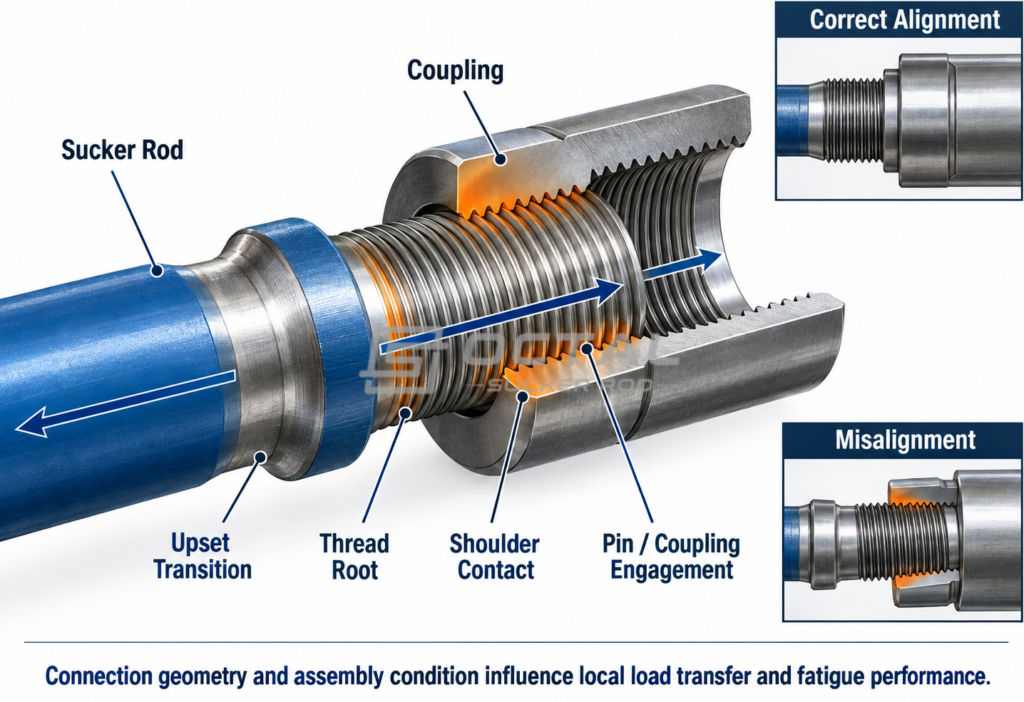
Under repeated loading, the pin, shoulder, thread root, and upset transition experience localized stresses. Connection damage may result from incorrect thread engagement, unsuitable coupling selection, improper makeup, misalignment, or surface defects.
A conventional API shouldered connection must therefore be assessed as part of the complete rod-string configuration. Modified high-torque connections and proprietary pin designs require their own compatibility and installation requirements.
For progressive cavity pump applications, axial grade strength alone is insufficient because combined tension and torque can control the design.
API 11B Grade Verification and Quality Control
The specified rod grade must be supported by finished-product mechanical properties, material identification, and dimensional conformity.
Material composition and tensile strength are not the only inspection concerns. The forged rod ends and machined connection areas must also meet their applicable dimensional and surface-quality requirements.
Grade Verification and Inspection Requirements
| Inspection Item | What Should Be Verified | Typical Supporting Record |
| Steel chemistry | Specified alloy composition and heat identity | Material / heat analysis certificate |
| Yield strength | Meets the specified minimum | Tensile test report |
| Tensile strength | Meets the required grade range | Tensile test report |
| Heat treatment | Required treatment condition and production traceability | Heat-treatment record |
| Rod-body dimensions | Diameter, length and applicable tolerances | Dimensional inspection |
| Rod-end geometry | Upset transition, pin geometry and shoulder condition | Rod-end dimensional report |
| Connection conformity | Thread form, dimensions and relevant gauge acceptance | Thread inspection record |
| Product identification | Grade, size and heat/lot identification | Marking and traceability records |
The inspection scope, sampling frequency, acceptance criteria, and supplied documents must follow the applicable API 11B edition, purchase order, and inspection and test plan (ITP).
A typical manufacturing route may include:
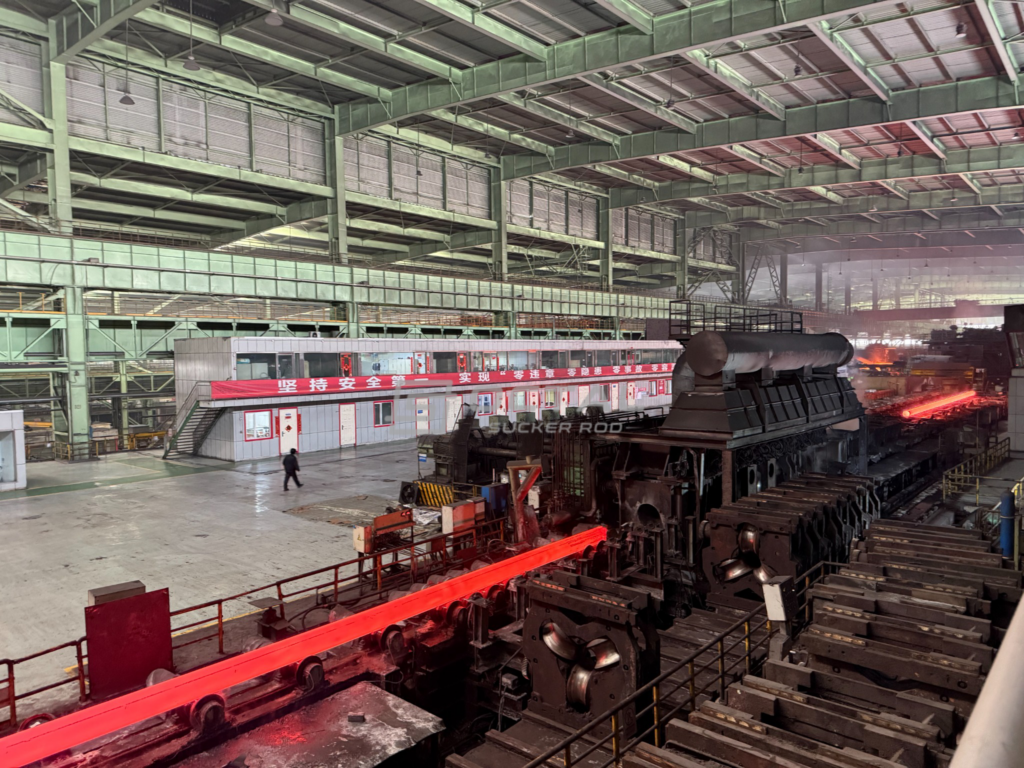
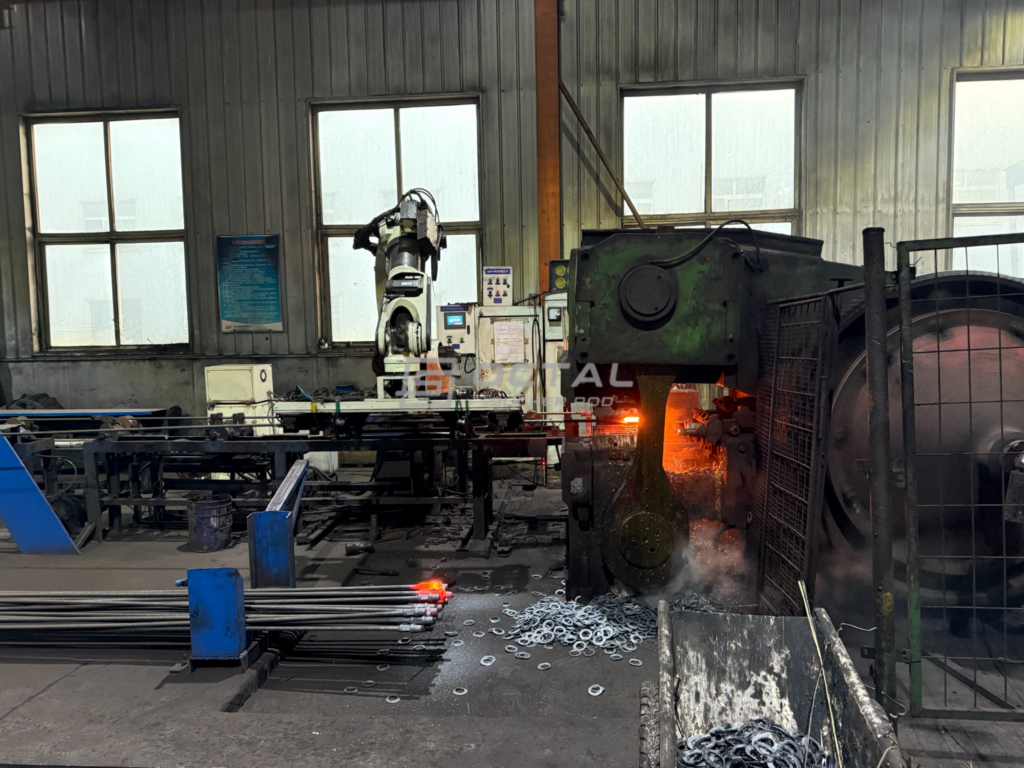
Raw Material Verification → Straightening → Cutting → Rod-End Upsetting → Heat Treatment → Machining → Inspection → Marking and Packaging
The exact sequence depends on the rod design, material, and manufacturer’s approved process. Specific surface treatments and non-destructive examinations should not be assumed unless included in the confirmed manufacturing specification or purchase requirements.
For purchasing approval, inspection records should be traceable to the delivered grade and production heat or lot. Where third-party inspection is required, the applicable witness points and release documents should be agreed upon before production.
Sucker Rod Ordering Support and Technical Review
When requesting a quotation, specify the sucker rod grade or material designation, rod diameter, nominal length, pin and coupling requirements, quantity, applicable API 11B edition, inspection documents, and delivery destination. A grade name alone may not fully define the required material, connection, or inspection scope.
For wells involving corrosive produced fluids, higher cyclic loads, or deviated well paths, it is also useful to provide fluid analysis, operating temperature, maximum and minimum rod loads, well deviation, and any project-specific connection requirements. These details help determine whether the proposed grade and material system are suitable for the intended service.
Octal Sucker Rod can support the order review before production by checking the submitted requirements against the available rod grades, material options, dimensions, and connection configurations. We can also confirm the required inspection documentation, marking and traceability requirements, packing method, and delivery terms before the order is released.
Where the initial specification is incomplete, our team can help identify the information that still needs to be confirmed—such as grade/material combination, rod size, pin and coupling compatibility, inspection scope, or documentation requirements—so these items are clarified before production rather than during final inspection or delivery.
FAQ
What is the difference between Grade C and Grade D sucker rods?
Grade C has a 60 ksi minimum yield strength and 90–115 ksi tensile strength. Conventional Grade D-family rods have an 85 ksi minimum yield strength and 115–140 ksi tensile strength. Grade D provides greater specified strength, but grade selection still depends on fatigue loading, corrosion, and connection performance.
Are Grade K and Grade KD sucker rods interchangeable?
Not automatically. Grade K is a standard-strength alloy grade, while KD commonly identifies a higher-strength special-alloy D-family product. Differences in mechanical properties, chemistry, heat treatment, and service qualification must be checked before substitution.
Which sucker rod grade is suitable for wells containing H₂S?
No sucker rod grade should be approved for H₂S service solely by its grade name. Material qualification depends on H₂S partial pressure, pH, temperature, chloride concentration, hardness, stress, and the specified sour-service requirements. The material and corrosion-control program must be assessed together.
Does higher tensile strength mean longer sucker rod fatigue life?
No. Fatigue life depends on the operating stress range, local stress concentrations, surface condition, metallurgy, connection quality, and corrosive exposure. A higher-strength rod may have no service-life advantage if these factors are not properly controlled.
What should buyers verify before changing sucker rod grades?
Confirm the required strength, material specification, rod diameter, pin and coupling compatibility, operating loads, corrosion conditions, and applicable API 11B edition. The replacement grade should also have suitable inspection records and traceability before installation.